Mattresses
Published April 24, 2026
10 minWhat Is a Luxury Mattress?
A guide to the materials, construction, and value behind a genuinely high-quality mattress
Table of contents
What luxury actually means in mattress constructionThe materials that define a luxury mattressConstruction: how the layers work togetherThe price question: what you're actually paying forWhat you get long-term: durability and feelHow to evaluate a luxury mattress claimFrequently Asked Questions
The word luxury gets used loosely in the mattress industry — attached to products that range from genuinely exceptional to simply expensive. What separates a true luxury mattress from a well-marketed mid-range one isn't a price tag or a brand name; it's the quality of what's inside, how those materials are layered and assembled, and how that construction translates to sleep you can actually feel. This guide covers what luxury actually means when it comes to mattress construction, what you're paying for when you invest in a high-quality mattress, and what to look for when evaluating whether a mattress lives up to the claim.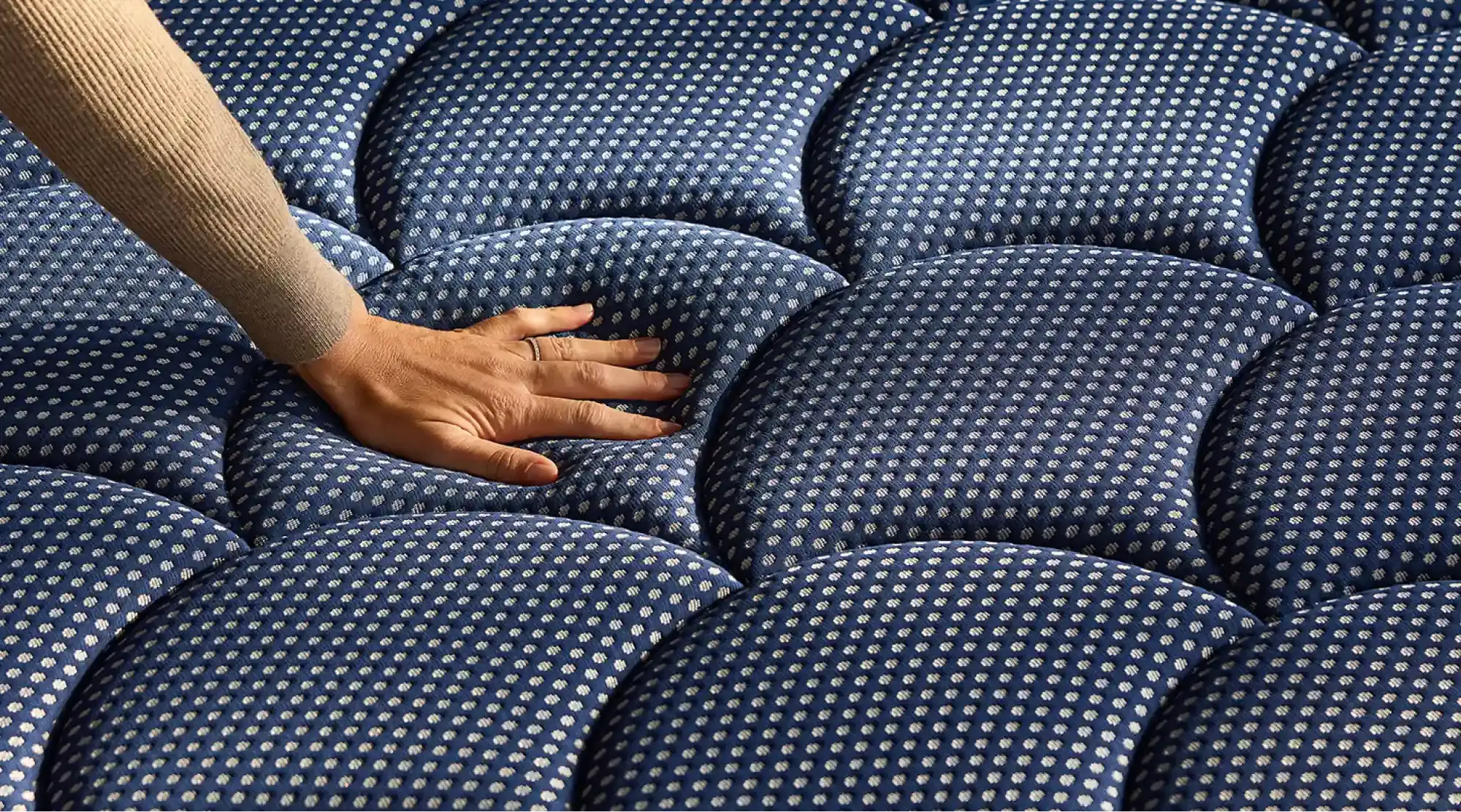
What luxury actually means in mattress construction
In most product categories, a luxury label signals craftsmanship, durability, and materials that perform at a higher level over time. In mattresses, the same principle applies — but because the interior is invisible, the gap between genuine quality and vague marketing claims can be hard to see from the outside.True luxury in a mattress comes down to a few specific things: the density and composition of its foam layers, the quality and configuration of its coil system, the fabric and construction of its cover, and how all of those elements are engineered to work together. A luxury mattress isn't just comfortable on night one, but rather built to maintain that comfort for years. It supports different body types and sleep positions, and works to regulate temperature and reduce motion transfer with real, material-level engineering rather than surface-level claims.The distinction matters because many mattresses that use luxury language are constructed with low-density foams that break down within a few years, coil systems that lack adequate support depth, or cover fabrics that feel soft initially but don't hold up. A genuinely luxury mattress costs more because the materials that deliver long-lasting performance cost more to source, certify, and assemble.The materials that define a luxury mattress
Cover fabrics and quilted tops
The surface of a luxury mattress is typically made from high-quality natural or performance fabrics — organic cotton, Tencel, cashmere blends, or proprietary quilted covers that go beyond standard ticking. The cover isn't just cosmetic; it affects how the mattress breathes, how cool the sleeping surface stays, and how the comfort layers beneath transmit pressure relief.Quilted tops add a layer of soft material stitched directly into the cover — memory foam, wool, or other materials — that provides immediate softness before you reach the deeper layers. A well-constructed quilted cover feels distinctly different from a thin stretch fabric, and that difference is one of the first things you notice when moving from a mid-tier mattress to a genuinely premium one.High-density foams
Foam density is one of the clearest markers of mattress quality, and one of the most commonly obscured. Mid-range mattresses often use foams which feel soft initially but compress and lose responsiveness faster. Luxury mattresses use high-density foams that hold their shape and performance over many years of use.Memory foam at the luxury tier is also formulated to address heat retention, one of the most common complaints about standard memory foam. Gel infusions, open-cell structures, and phase-change materials draw heat away from the body rather than trapping it — which is a meaningfully different experience for people who sleep warm.Coil systems
Most luxury mattresses are hybrids — combining foam comfort layers with a pocketed coil support core — because that construction addresses the limitations of foam-only design. Individually wrapped coils move independently, conforming to the body's contours without transferring motion to a partner. Higher coil counts and thicker gauge wire contribute to better edge support, more consistent pressure distribution, and a longer functional lifespan.Coil systems also matter for breathability: coils create airflow channels through the mattress core that foam alone can't replicate, making hybrid construction inherently more temperature-neutral than all-foam alternatives.Not sure which mattress fits you best? Find out now.
Natural latex
Some luxury mattresses incorporate natural latex — harvested from rubber trees — as a comfort or transition layer. Natural latex is responsive and resilient, conforming to the body without the sinking sensation of memory foam, and it's naturally more durable than synthetic alternatives. Synthetic latex performs differently and doesn't carry the same durability profile, so the distinction between natural and blended or synthetic latex matters when evaluating a mattress's construction.Construction: how the layers work together
The quality of individual materials only tells part of the story. A luxury mattress is engineered as a system — each layer has a specific function, and the transitions between them are designed to deliver a coherent feel rather than a series of disconnected sensations.A well-built luxury hybrid typically works in this sequence: a breathable, quilted cover that provides immediate softness; one or more comfort layers of high-density foam or latex that deliver pressure relief and contouring; a transition layer that bridges the soft surface to the firmer support core; and a pocketed coil system that provides foundational support, edge-to-edge stability, and airflow. In the best-constructed mattresses, you don't feel individual layers — you feel a unified sleep surface that responds to your body naturally.DreamCloud is built on exactly this logic, with eight distinct layers including a CloudQuilt™ cover — a proprietary quilted system with cooling fibers sewn directly into the surface — over high-density memory foams, a transitional foam layer, and an individually wrapped coil core for hybrids. The result is a sleep surface that combines genuine cloud-like softness at the surface with deep, responsive support beneath, which is why it tends to work well across different sleep positions and body types rather than performing well only in a narrow range.The price question: what you're actually paying for
Luxury mattresses cost more than mid-range ones, and for specific reasons. High-density foams are more expensive to produce. Natural latex requires careful sourcing. A robust pocketed coil system adds manufacturing complexity. Premium cover fabrics — particularly those made from certified organic materials — carry a real cost premium over standard ticking.Certifications add to that cost, but they matter. CertiPUR-US® certification means the foam has been tested for harmful emissions and chemical content. OEKO-TEX and similar standards apply to fabrics and finished products. These aren't marketing badges — they reflect actual testing against safety and quality standards, and they're one of the clearest objective signals that a mattress is made from the materials it claims to be made from.What you're not paying for, in a well-priced luxury mattress, is retail overhead. The shift to direct-to-consumer sales over the past decade has significantly narrowed the gap between what genuine quality costs to build and what you pay for it, making mattresses with true luxury-level construction accessible at prices that traditional retail pricing used to preclude.What you get long-term: durability and feel
A luxury mattress typically carries a longer lifespan than a mid-range alternative, and the difference is most apparent between years three and seven — where budget and mid-range mattresses begin to show visible sagging, body impressions, and loss of responsiveness, while well-built mattresses with high-density foams and quality coil systems largely maintain their original feel and support profile.The functional differences in sleep quality are also real and compounding over time. Temperature regulation can improve sleep continuity — sleeping warm disrupts rest even when you don't fully wake. Motion isolation matters for couples. Edge support affects whether you feel stable at the full width of your mattress or unconsciously avoid the perimeter. Genuine pressure relief at the shoulder and hip affects how you feel each morning. These aren't incremental improvements; accumulated over time, they add up to meaningfully better sleep.Trial periods and warranties are another dimension of long-term value worth factoring in. A brand that offers a year-long trial and a lifetime warranty is making a material commitment to their product's durability. When a mattress manufacturer offers those terms with confidence, it tends to be a signal that the construction can support them.How to evaluate a luxury mattress claim
Given how freely luxury is used in mattress marketing, it helps to know what to look for — and what to ask.Look for CertiPUR-US® certification on foam layers, specific coil counts and gauge information, foam density specifications, natural (not just "latex") material claims, and certified organic fabric where relevant. Brands that publish construction details layer by layer tend to do so because they're proud of what's inside.Ask how long the trial period is, what the warranty covers and for how long, and whether the warranty has narrow exclusions around body impressions or sagging. A long, well-written warranty is itself a quality signal.Be skeptical of vague references to "advanced technology," "high-performance foam," or "premium materials" without specifics. Marketing language that stacks aspirational descriptors without naming materials, certifications, or mechanisms tells you more about the brand's positioning than the mattress's construction. Luxury alone, without construction detail to support it, is a description of price point — not quality.The mattresses that hold up to scrutiny are the ones built on specific, verifiable quality decisions. Those are the ones that deliver on the promise of genuinely better sleep.If you're curious, explore DreamCloud's mattress line here.Frequently Asked Questions
What makes a mattress considered luxury? Luxury mattresses are characterized by high-density foam layers, individually wrapped pocketed coil systems, premium cover fabrics, and construction that maintains performance over time. The distinction lies in specific material quality and engineering — not price or marketing language alone.How long should a luxury mattress last? A well-constructed luxury mattress can typically last ten years or more while maintaining its original feel and support, compared to five to seven years for mid-range alternatives. The durability comes primarily from high-density foams (3.5+ lb/cubic foot) and a quality coil system that resists compression over time.Is a hybrid or all-foam mattress more luxurious? Both can be luxury-tier, but hybrid construction — foam comfort layers over a pocketed coil core — tends to offer advantages in temperature regulation, edge support, and long-term durability that all-foam mattresses can't fully replicate. Most high-end mattresses at the true luxury tier are hybrids for this reason.What certifications should I look for in a luxury mattress? CertiPUR-US® certification on foam layers is the most important baseline — it covers harmful emissions, heavy metals, and chemical content. OEKO-TEX Standard 100 applies to fabrics and finished goods. For latex, GOLS (Global Organic Latex Standard) certification is the relevant standard if natural latex is a priority for you.Does a higher coil count mean a better mattress? Coil count is one factor among several, and it matters most in context. A higher count of individually wrapped pocketed coils generally contributes to better contouring and motion isolation. Coil gauge (wire thickness) and the configuration of coils around the perimeter for edge support also affect performance significantly — coil count alone isn't a complete quality signal.What's the difference between memory foam and latex in a luxury mattress? Memory foam conforms closely to the body and excels at pressure relief, but can retain heat and responds slowly when you shift positions. Natural latex is more responsive and breathable, with a bouncier feel that some sleepers prefer. High-quality luxury mattresses often use memory foam for targeted pressure relief in upper comfort layers while incorporating latex for responsiveness in transition layers — using each material where it performs best.How do I know if a luxury mattress is worth the investment? A luxury mattress earns its price when the construction details — foam density, coil specifications, cover quality, certifications — are clearly disclosed and substantive, when the trial period and warranty terms are genuinely protective, and when those material choices connect to real, verifiable performance differences. If a brand can't tell you what's inside the mattress in specific terms, that's worth paying attention to.Related ArticlesThe Ultimate Mattress Buying Guide For Your Sleep NeedsMost Comfortable Memory Foam Mattress for 2025Can Two Adults Sleep on a Full Mattress?The Best Sleeping Position for Lower Back PainThe Best Mattress for New Parents
Related ArticlesMemory Foam vs. Gel Memory Foam MattressMemory Foam Vs. Spring Mattress: What Is Better?Latex Vs Memory Foam: Which Is Best For You?Are Memory Foam Mattresses Safe?How Long Do Memory Foam Mattresses Last?
Related ArticlesFirm vs Medium Mattress: What’s Best for You?Best Times Of Year To Buy A Mattress in 2022What Is a Plush Mattress?What Is a Hybrid Mattress?What Is a Hypoallergenic Mattress?