Sleep Health
Published July 20, 2022
11 minHow to Share a Bed: Problems and Their Solutions
No matter how much you love your partner, you’ve encountered the adversities of sharing a bed at least once in your lifetime. Sleep divorce is real, and the reasons might be the weird sleeping positio
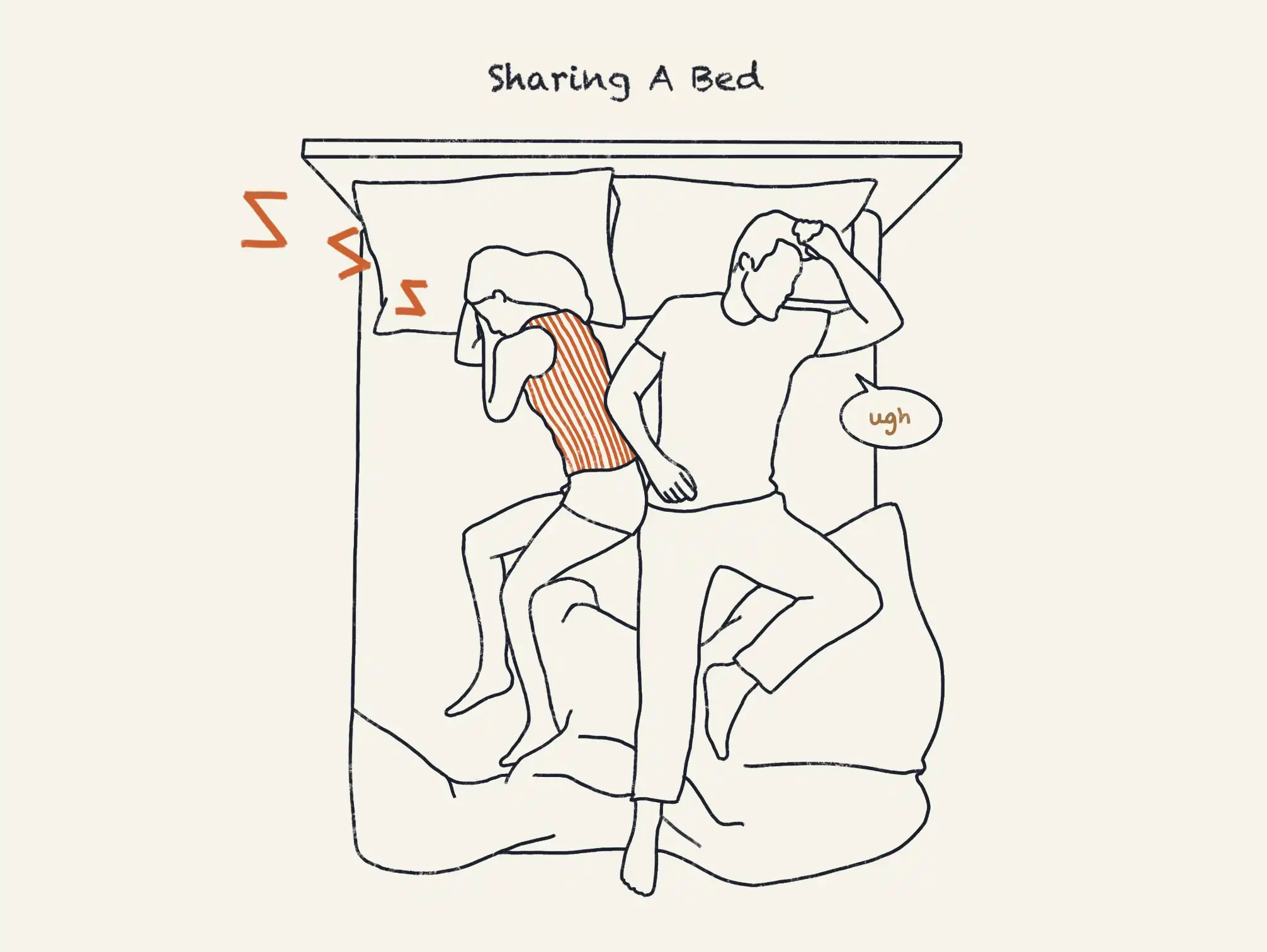
Table of contents
Do Sleeping Buddies Affect How Long You Sleep? Why Sharing a Bed May Be Difficult? 7 Tips for Sharing a Bed with Your Partner What If I Still Can’t Sleep Comfortably With My Partner? Frequently Asked Questions
No matter how much you love your partner, you’ve encountered the adversities of sharing a bed at least once in your lifetime. Sleep divorce is real, and the reasons might be the weird sleeping positions of your partner. Sharing a bed with someone after you’ve spent most of your days sleeping alone can be compromising - until you learn how to get great at sharing a bed. Some of the common factors that hinder sleeping in the same bed with your partner are snoring, restlessness, irregular body temperature, and unmatchable sleep cycles. However, there are many ways where sharing a bed with your partner will become seamless, and this article covers it all.
Do Sleeping Buddies Affect How Long You Sleep?
Research says, sharing a bed with someone doesn’t alleviate better sleep but instead instills a sense of security in the person. While sleeping, having a partner beside you is surprisingly not that great - especially in cases of women. In addition, sleeping in the same bed as someone might be detrimental to your sleeping cycle because of reasons like snoring, continuous movements, extreme body temperature, and more. All these factors affect the way and also how long you sleep.Why Sharing a Bed May Be Difficult?
Two people in a bed might arouse some intimacy, spark, and endless conversations. But, sharing a bed might also lead to irregular sleep patterns and adjustments. So, let us get going with what all accompanies while sharing a bed.Snoring
Around 40% of men and 24% of women are snorers, as stated by the University of Utah. Snoring, though one of the most typical activities while sleeping, might be a sign of more severe health issues like sleep apnea, or allergies as stated by Janet Kennedy, a clinical psychologist and author of The Good Sleeper. Snoring is detrimental to not only the partner’s sleep but also to the snorer who might suffer from daytime sleepiness, headaches, and deprived sleep throughout the day.Differing Temperature Preferences
According to studies, the ideal temperature for sleep is between 68 and 72 degrees. Though your partner might be a warm sleeper while you’re the opposite. The best way to tackle this situation is by putting on more layers. One of the simplest solutions to know how to sleep better with your partner is to adjust your night clothes and wear something warm.Opposing Sleep Cycles: Early Bird vs. Night Owl
Sharing a bed might be tedious if you and your partner have different sleep cycles. While you may be an early bird, your partner might be a night owl. The founder of Insomnia Coach , and also a certified sleep health expert, Martin Reed states how one should always stick to their sleep cycle. This is because our sleep cycles are controlled by ‘ chronotype’ or in simpler terms, the body rhythm that controls our sleep cycle. Therefore, altering the sleep cycle will not be beneficial even when sharing a bed. For instance, if a night owl tries to sleep early, it will only lead to insomnia because they will force their body to sleep, causing frustration and restlessness.Bed and Blanket–Hogging
One major issue while sharing a bed with your partner, one major issue is adjusting the bed and blankets. Both of you might often sleep off peacefully with the blanket properly distributed - only to wake up shivering in the cold and noticing the whole blanket covering either of you. The fine art of sharing a bed is real simple - investing in a bigger bed and separate blankets or comforters. Every couple needs to have their own personal space, especially while sleeping. And investing in two separate twin comforters instead of a single big one might be beneficial.Uninvited Guests (aka Your Kids)
Sharing a bed with your partner is one thing, but your child making their own space in the same bed is another. Sleeping with your child tends to break your regular sleep cycle resulting in sleepless nights as they might be restless. If your child insists on sleeping with you, then it’s time you need to be strict with them. You need to fix their habit of falling asleep and waking up independently. This specific issue might also result in your partner leaving the bed due to a space crunch, eventually leading to a marriage crisis.Late-Night Wake-Ups
If you are concerned and often state ‘my partner and I can’t sleep together due to his late-night wake-ups’ - it is time for your partner to be courteous about it. One thing that eases sharing a bed is your partner limiting the usage of all electronic devices while you sleep. They can also try and find solace working in the living room. They can stay there till the time they feel sleepy, then return to the bedroom to sleep - without causing any disturbance.Calling It Quits
Some people are simply sleep-incompatible , and it is quite normal. After sharing a bed, if you regularly find yourself sleep-deprived the next morning, or feel very unrested, the solution is to sleep separately. Try sleeping separately for a couple of weeks and notice the change. Health always comes first, and sabotaging it would affect your daily life as well. Having a healthy sleep is a necessity to lead a healthy and prosperous life, and even if that means sleeping separately - it ought to be done.7 Tips for Sharing a Bed with Your Partner
If sharing a bed with your partner is becoming an issue, instead of dodging, speak about it. There are also certain solutions stating how to get great at sharing a bed as explained below.Get a Bigger Mattress
One of the easiest and most effective ways to deal with issues while sharing a bed is to invest in a bigger mattress. Having a small space for both of you feels great when cuddling. But the moment you feel sleepy, your body and mind would want some ‘me-space’ to sleep peacefully. Full or twin beds are great options for single adults. But for couples, queen beds are often considered the most popular choice because of the ample space offered. Each person will have ample space for themselves. After all the cuddling, you will surely love to sleep in your own space on a bigger mattress.Another thing to consider when buying the mattress is checking if it offers motion isolation. The motion-isolation feature prevents the other person from getting disturbed by the movements of their partner.Place the Bed in the Middle of the Room
Neither you nor your partner likes crawling over the other person when they need to reach out of the bed. Placing the bed in the middle of the room will make space for both of you to reach out and move back from different ends without disturbing anybody’s sleep.Solve Snoring Problems
Snoring, as already mentioned, is one of the most common symptoms that can be associated with severe health problems like Sleep Apnea. Now, while sharing a bed, if your partner’s snoring bothers you, you need to undergo certain adjustments.- Put on your earplugs, especially the ones featuring noise cancellations
- Invest in a white noise machine or a sound machine that plays some soothing music overtaking the snoring sound
- Try side sleeping - this is helpful in keeping the airways open and lowering the sound
- Consume over-the-counter nasal strips or dilators that open up the nasal pathway
- People having nighttime allergies should try decongesting for better rest
Sleep According to Your Own Schedule
It is essential to sleep according to your chronotype, but sharing a bed with a person having a completely opposite sleeping schedule is a problem. In that case, you both have to adhere to your own timings thereby making you feel well-rested and productive.Try Different Sleep Positions
Trying out different sleeping positions when sharing a bed might be helpful in providing the most peaceful sleep. You can test out different sleeping positions with your partner and check which one provides comfort to both of you.Communicate with your Partner
Communication is the key to a healthy relationship, and this is also applicable when you are sharing a bed with your partner as well. Both of you need to be on the same page regarding the sleeping issues that either of you are facing. Unresolved issues might lead to extreme frustration.- While sharing a bed, it may happen for one partner to sleep late and the other very early. Two things are mandatory in situations like this - earplugs and an eye mask, this will ensure that the early sleeper is not bothered.
- On the other hand, if you or your partner sleeps hot or cold, the thermostat needs to function accordingly. If you sleep cold, you need to layer up more warm clothes and a comforter. And if you sleep hot, you can put on just a single layer or nothing at all.
Make Your Bedroom More Sleep-Friendly
Making your bedroom more sleep-friendly will make it more effortless for you and your partner to doze off. Just a few alterations to your bedroom will make it appear beautiful and cozy. What changes to make?- Light or pastel shades of bedroom walls , bed sheets, blankets, and duvet might be excellent choices. White colors showcase a cool feeling that is beneficial for hot sleepers - it prevents either of you get overheated.
- While sharing a bed, if you and your partner have diverse preferences regarding duvets, then change the duvet covers.
- An eye mask might be helpful if your partner has the habit of reading books using light, or using the laptop/tablet/phone.
- Earplugs are another helpful device that guards you against a snoring partner or any other surrounding sound.