Mattresses
Published June 18, 2026
8 minMattress Trial Period: What It Is, How Long It Should Be, and How to Use It
A mattress trial is the closest thing to a real return policy in the sleep industry — and the length matters more than most shoppers realize.

Table of contents
What Is a Mattress Trial Period?How Long Should a Mattress Trial Be?What to Actually Do During a Mattress TrialHow Trial Periods Vary by BrandWhat a 365-Night Trial Actually ChangesIs a Longer Trial Always Better?So, Is a 365-Night Trial Worth Seeking Out?Frequently Asked Questions
Buying a mattress online means committing before you've spent a single night on it. A trial period is how brands make that feel less like a gamble — it gives you a set window to sleep on the mattress at home, in your actual bedroom, with your actual habits, before your purchase is truly final. Knowing how trials work, what to watch for, and how different trial lengths compare can genuinely change how you shop.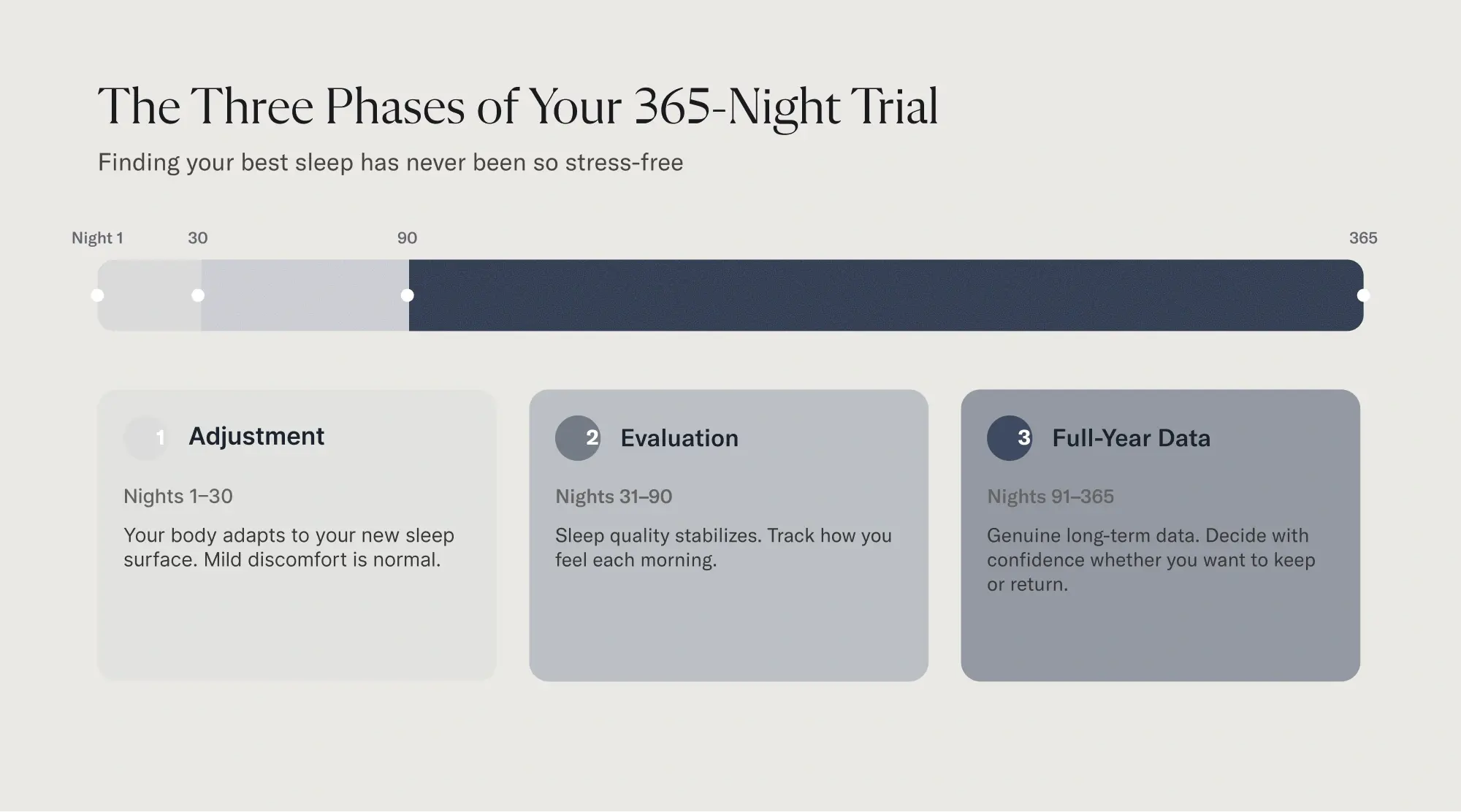
Not sure which mattress fits you best? Find out now.
What Is a Mattress Trial Period?
A mattress trial period is a window of time, typically between 30 and 365 nights, during which you can return a mattress for a full refund if it isn't working for you. Most online mattress brands offer one, because the alternative (buying a mattress after lying on it for three minutes in a showroom) isn't a particularly reliable way to make a lasting decision.Trials are distinct from standard retail return policies. A typical return window runs 30 days and usually requires the item to be unused, in its original packaging — neither of which applies to a mattress you've been sleeping on for weeks. A mattress trial is specifically designed for in-home, in-use evaluation. The expectation is that you'll sleep on it before deciding.How Long Should a Mattress Trial Be?
Long enough to account for a real adjustment period. Most sleep researchers suggest the body needs at least 30 nights to adapt to a new sleep surface. Your muscles, joints, and sleep patterns recalibrate when you switch mattresses, and early discomfort doesn't necessarily mean the mattress is wrong for you. It may mean the adjustment isn't finished yet.That's why most brands require a 30-night minimum before you can initiate a return. It's not gatekeeping, it's protecting you from returning something that would have been right if you'd given it another week or two.Beyond the adjustment window, longer trials give you something that 30 or even 90 days simply can't: seasonal range. A mattress that reads as comfortable in October can feel different in July. Temperature affects how you sleep, how firm a surface feels under your body, and where you feel pressure. A trial long enough to cover at least one season change gives you meaningfully better data than a shorter window.A 365-night trial — a full year — is categorically different from a 100-night trial for this reason. DreamCloud’s 365-Night Home Trial is designed to cover every season, every shift in your sleep, and every month of real use before you decide.What to Actually Do During a Mattress Trial
Most people treat their trial like a countdown. A more useful approach? Think of your first 30 nights as adjustment, and everything after as data.Sleep on it consistently. Don't rotate between your old mattress and the new one. Splitting nights between two different surfaces extends your adjustment period indefinitely and makes it harder to evaluate either one clearly. Commit to your new mattress from night one.Give yourself 30 nights before drawing conclusions. Back tension, hip pressure, and general unfamiliarity are all common in the first weeks on a new surface. These symptoms often resolve on their own. Returning a mattress at day ten because of initial stiffness is one of the most common — and avoidable — trial mistakes.Pay attention once you're past the adjustment window. Are you sleeping through the night more consistently? Waking with less lower back stiffness? Feeling warmer than you'd like? This is the period where the mattress tells you whether it's actually working.Review the return logistics before the trial ends. Most brands coordinate free pickup, but timing and conditions vary. Know what the process looks like before you're in the final week of your window.How Trial Periods Vary by Brand
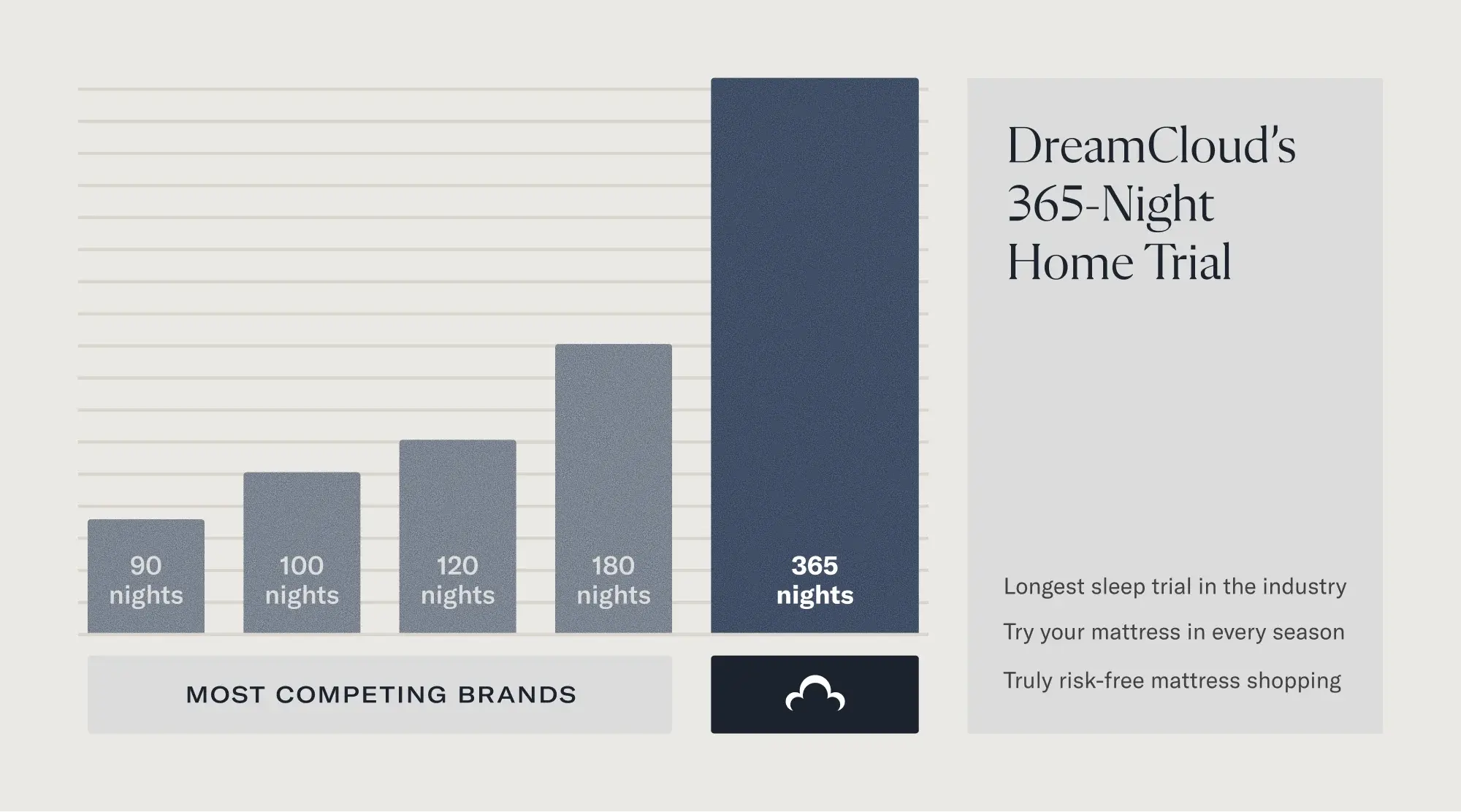
Most online mattress companies now offer trials as standard. The length and conditions are where they diverge.The most common range for mattress trials run from 90 to 120 nights. Some brands settle on exactly 100 nights. A handful extend to a full year. Across the landscape, 365 nights is still the longest trial widely offered.Beyond the length, there are a few conditions worth checking before you commit:- Minimum use requirements. Most brands require 30 nights before you can initiate a return. This is standard and reasonable, so you should plan for it.
- Refund vs. store credit. Most reputable brands offer a full cash refund. Some issue store credit only. Confirm which one you're getting.
- Who handles pickup. Most brands coordinate free pickup and donate or recycle the mattress. A few require you to arrange returns yourself, which can complicate things depending on where you live.
- Per-customer limits. Some trials are one-time per customer, not per order. If you've returned a mattress from a brand previously, confirm the trial still applies to a new order.