Sleep Health
Published February 4, 2022
8 minHow to wash pillows without ruining the fill
Our fill-by-fill guide so you can clean your pillows confidently and keep them sleeping right.

Table of contents
Why the fill type is the first thing to checkMachine-safe: synthetic polyester fillMachine-safe with care: down and down-alternativeNot machine washable: memory foamNot machine washable: latexHow to tell when a pillow is actually dryBetween washes: what extends the time between cleaningsKnowing when to replace instead of rewashFrequently asked questions
Most pillows are washable, but not all of them are machine washable, and that distinction matters more than most care labels make clear. The fill inside your pillow determines what it can handle: how much water, how much heat, how much agitation before something breaks down permanently. Getting it wrong once can compress a fill that never quite comes back, or leave trapped moisture that shows up as something worse a few weeks later.Here's what actually works, organized by fill type.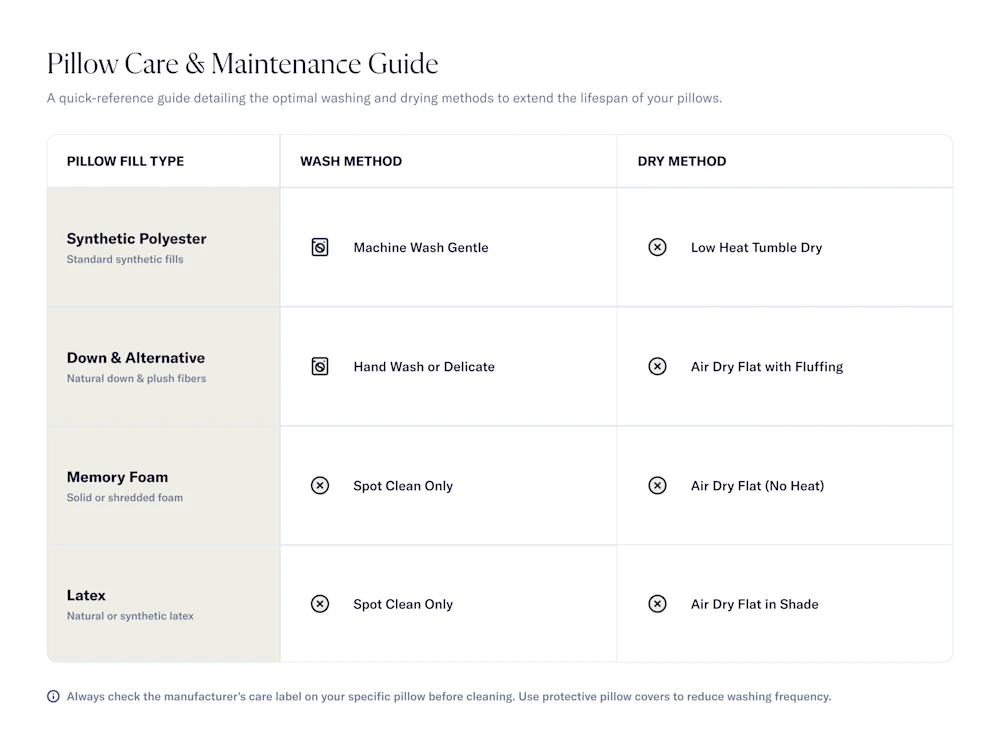
Why the fill type is the first thing to check
Before running anything through the wash, the most useful thing you can do is figure out what's inside. Most pillows list the fill on the tag alongside the care instructions, though care labels don't always spell out why the guidance is what it is. A "hand wash only" instruction on a memory foam pillow isn't arbitrary — it's protecting the open-cell structure that makes the pillow work. Understanding the logic behind it makes the rules easier to remember.The four fill types with meaningfully different care needs are synthetic polyester, down and down-alternative, memory foam, and latex.Machine-safe: synthetic polyester fill
Synthetic polyester pillows are the most forgiving of any fill type. They handle a standard home washer comfortably, and the washing process can actually restore some of the loft they've lost over time.- Wash two pillows at a time if possible, to keep the load balanced
- Use cold or warm water on a gentle cycle
- Run an extra rinse cycle to make sure no detergent residue stays behind
- Dry on low heat with two or three dryer balls to break up clumping and restore loft
- Check that the fill feels fully dry before putting it back in a pillowcase — trapped dampness develops into a musty smell quickly
Machine-safe with care: down and down-alternative
Down and down-alternative fills can go in the washing machine, though they need a little more attention in the dryer to come out right. The main risk with down isn't the wash itself. It's clumping during drying, which is why rushing that step tends to cause problems.- Wash on a gentle cycle using warm water and a down-friendly detergent (harsh formulas can strip the natural oils in down fill)
- Keep the load balanced and run an extra rinse to remove detergent thoroughly
- Dry on low heat, using tennis balls or wool dryer balls to break up clumps as they form
- Check the fill after the first dryer cycle and run another if any sections still feel damp or dense
- Down pillows can often need 90 minutes to two hours to dry completely at low heat
Not machine washable: memory foam
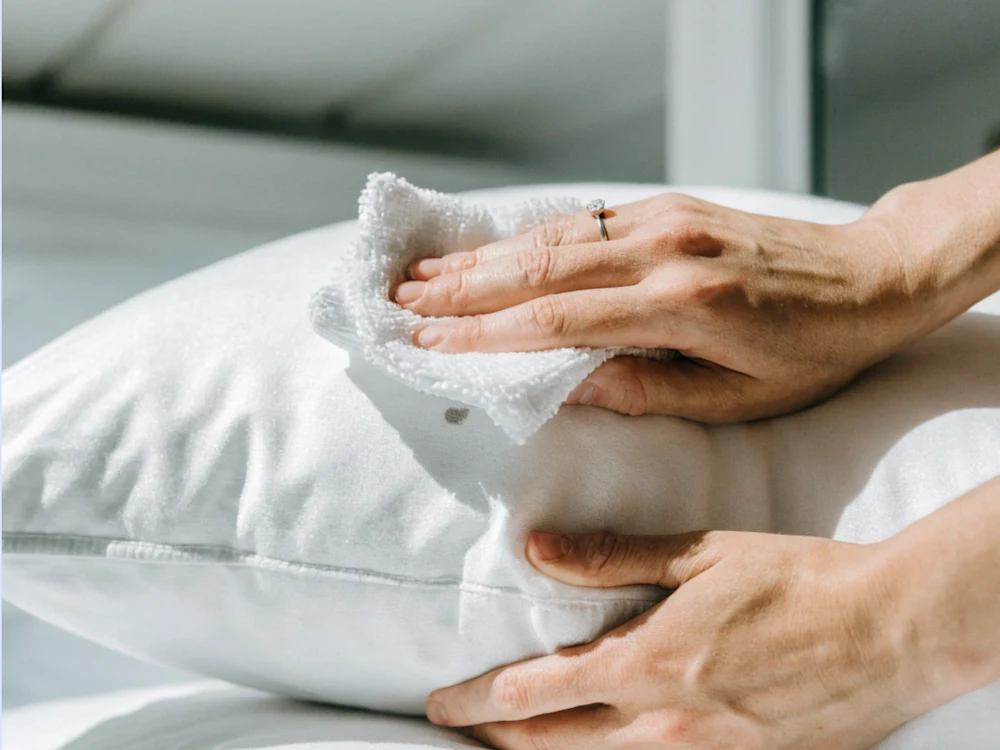
Memory foam pillows, whether solid or shredded, should never be submerged or put in the washing machine. The foam's open-cell structure absorbs water readily and releases it very slowly; a standard spin cycle won't remove enough moisture to make air drying safe, and trapped dampness can create conditions where mold develops inside the fill without any visible sign on the outside.Spot cleaning covers most of what people actually need:- Remove the pillowcase and any cover
- Dampen a cloth with cool water and a small amount of mild detergent
- Work the stain gently without pressing water deeper into the foam
- Blot dry and let the pillow air dry completely before replacing the cover, in a well-ventilated space or near a fan