Mattresses
Published July 15, 2026
9 minBest Mattress Topper for Back Pain
The right topper can take meaningful pressure off an aging mattress, but the wrong one can make things noticeably worse.

Table of contents
What a Mattress Topper Can (and Can't) Do for Back PainMemory Foam Toppers: The Case for ContouringLatex Toppers: Responsive, Breathable, Naturally BuoyantFirmer Toppers: When the Problem Is SinkageHow to Choose Based on Your Specific Back PainA Note on ThicknessThe Mattress Underneath Still MattersReady to Rest a Little Easier?Frequently Asked Questions
Back pain in bed rarely comes from one place. Sometimes your mattress has softened past the point of support. Sometimes it's always been a little too firm, and your hips and shoulders are paying for it. And sometimes the issue isn't the mattress at all — it's that you've shifted how you sleep over the years, and what worked for you at 30 certainly feels different now. A mattress topper can address each of these situations, but only if you choose one that fits the specific kind of discomfort you're dealing with.
What a Mattress Topper Can (and Can't) Do for Back Pain
A topper adds a layer of cushioning, support, or both between you and your mattress. Done well, it can relieve pressure on the lumbar region, keep your spine from sinking into misalignment, and redistribute weight more evenly across your back. What it can't do is fix a mattress that has structurally broken down: deep indentations, sagging in the center, or coils that have simply run their course. If your mattress needs to be replaced, a topper is a delay, not a solution.That caveat aside, a quality topper often makes a meaningful difference for back sleepers who want a little more give, side sleepers whose hips and shoulders are absorbing too much pressure, and anyone on a mattress that sits a degree or two off their comfort sweet spot.Memory Foam Toppers: The Case for Contouring
Memory foam is often the first material people reach for when back pain is involved, and for good reason. Its pressure-relieving qualities come from a slow, controlled give — the foam responds to body heat and weight, contouring closely to your shape rather than pushing back uniformly. For lower back discomfort, this can often mean less pressure on sensitive spots and a gentler transition between the lumbar curve and the mattress beneath.The tradeoff worth knowing: traditional memory foam can sleep warm, and because it contours closely, it sometimes limits how freely you move during the night. If you tend to shift positions frequently, you may occasionally feel like you're lifting out of a cradle rather than rolling naturally.Toppers made with cooling fibers can often offset this — they allow memory foam to do its pressure-relieving work without trapping heat the way conventional foam can. Our DreamCloud mattress toppers are built with this in mind, pairing contouring foam with cooling materials so back sleepers get the support they need without waking up warmer than they went to bed.Higher-density memory foam toppers tend to hold their shape longer and provide more even support than low-density options, which can compress unevenly over time.Latex Toppers: Responsive, Breathable, Naturally Buoyant
Latex offers a different comfort dynamic. Where memory foam cradles, latex pushes back — it's springier, more immediately responsive, and tends to sleep cooler because of its open-cell structure. For back pain sufferers who find memory foam too enveloping or who run warm at night, latex is often the better match.Natural latex toppers tend to hold their feel consistently across years of use. They won't soften unevenly or develop impressions the way foam sometimes can. The support is also slightly more active — latex lifts and cushions at the same time rather than simply conforming, which can work well for combination sleepers or those who need lumbar support without losing the ability to move freely.Latex typically comes with more upfront cost than most foam options, but the durability generally justifies it over a longer replacement cycle.Firmer Toppers: When the Problem Is Sinkage
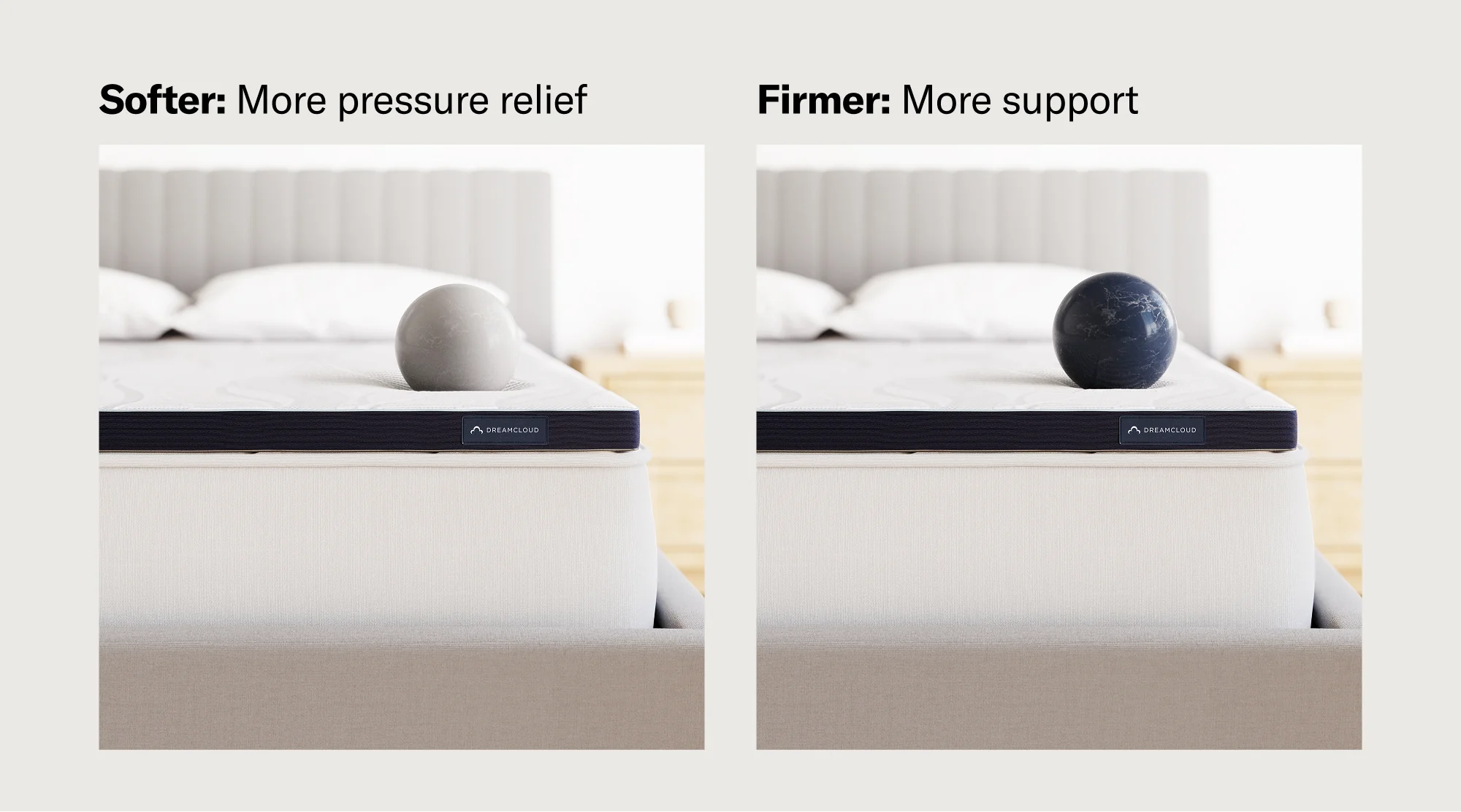
Not all back pain calls for more softness. If your current mattress has sagged or softened to the point where your hips sink below your shoulders and your spine curves unnaturally, a firmer topper can effectively restore surface-level support. This is particularly relevant for back sleepers — the pelvis is the heaviest part of the body in that position, and excessive sinkage can throw the lumbar region out of neutral alignment.What's worth knowing: a firmer topper doesn't have to mean a different material category. Our DreamCloud Firmer Mattress Topper uses gel-infused memory foam — so it still delivers the pressure relief and cooling memory foam is known for, just with a more supportive, stabilizing feel that can counteract a mattress that's softened past its useful range. If your sleep surface is trending too soft, the Firmer Topper can recalibrate it without giving up the contouring comfort memory foam provides. And if the opposite is true — your mattress is too firm and contributing to pressure buildup — our Softer Mattress Topper adds a plush, contouring layer of memory foam on top.How to Choose Based on Your Specific Back Pain
The most useful question isn't which material is best, it’s how your body feels when you wake up. A few patterns worth knowing:- Stiffness that loosens within an hour often points to accumulated pressure rather than a structural problem. A contouring memory foam or softer latex topper frequently helps here.
- Pain that starts mid-sleep and wakes you up can indicate sinkage-related misalignment, in which case its worth trying a firmer surface layer.
- Aching hips or shoulders paired with lower back discomfort is a common side-sleeper pattern, typically calling for more pressure relief rather than more firmness.
- No pattern at all — some nights fine, some not — is often mattress fatigue. A topper can stabilize the surface, but it's worth assessing whether the mattress itself is past its useful life.