Skip to Main Content
30-Day Price Match Guarantee
365-Night Home Trial
Forever Warranty™
Free Shipping & Returns
Find in Store

Bedroom

Published February 20, 2022

11 min

Types of Beds: A Complete Guide to Bed Frames and Styles

The frame you choose shapes how your bedroom feels and how your mattress performs. Here's how to sort through it.

DreamCloud Editorial Team Author Image
DreamCloud Editorial Team
upholstered bed in blue room
Table of contents
Platform BedsPanel BedsStorage BedsAdjustable BasesCanopy and Four-Poster BedsSleigh BedsDaybeds, Trundles, and BunksHow to Choose the Right Type of BedWhat Comes NextFrequently Asked Questions
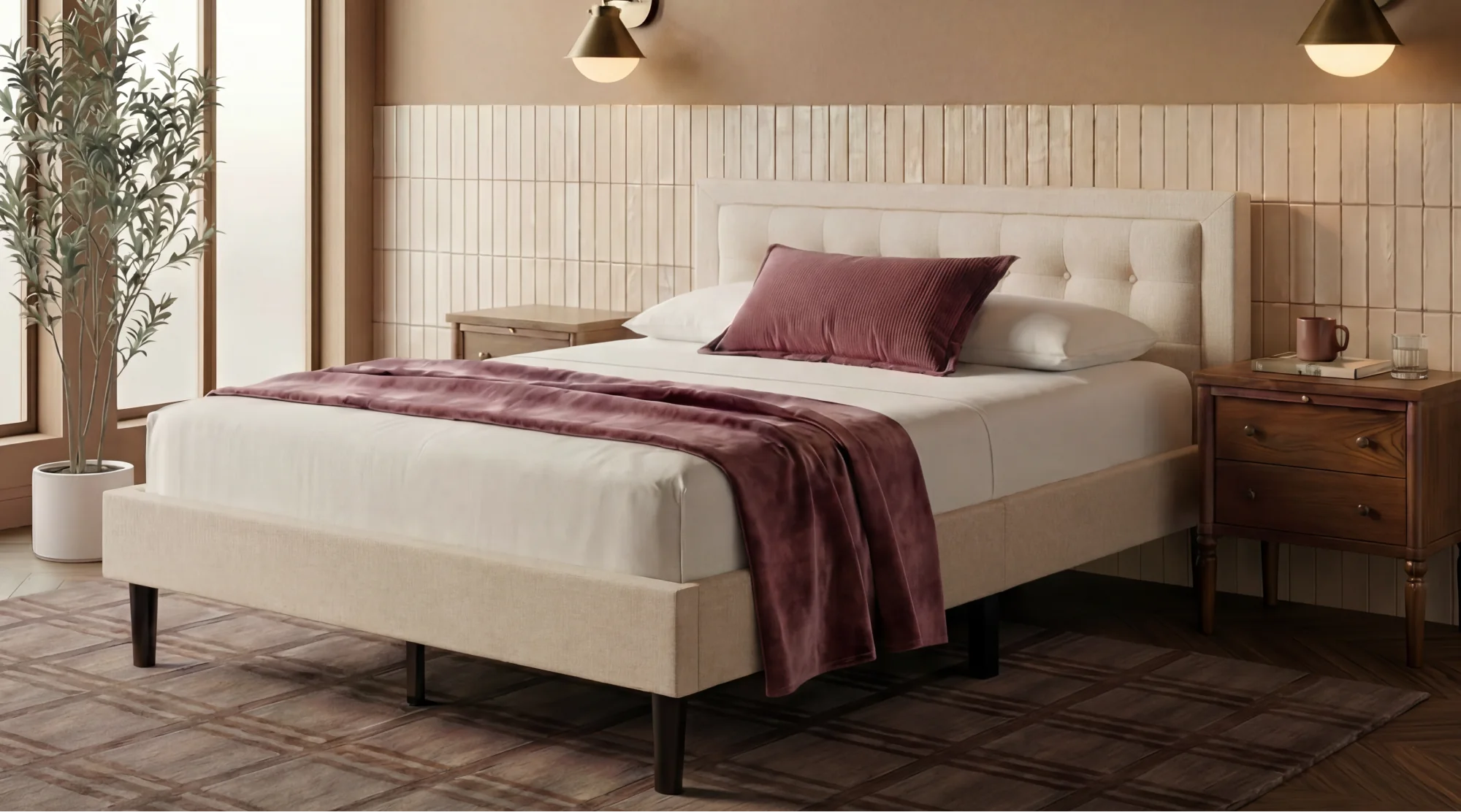
Choosing a mattress tends to get most of the attention — and rightly so. But the frame underneath it quietly shapes more of the experience than most people anticipate: how your mattress performs, how your room feels every day, and how easily you get in and out of bed each morning. The vocabulary around bed types has expanded alongside the options, so we’ve compiled a plain-language guide to the main styles, what each one is built for, and how to match your frame to the way you actually sleep and live.https://media.sienasleep.com/image/upload/v1783379096/bedframes-inline-1.webp
Platform Beds

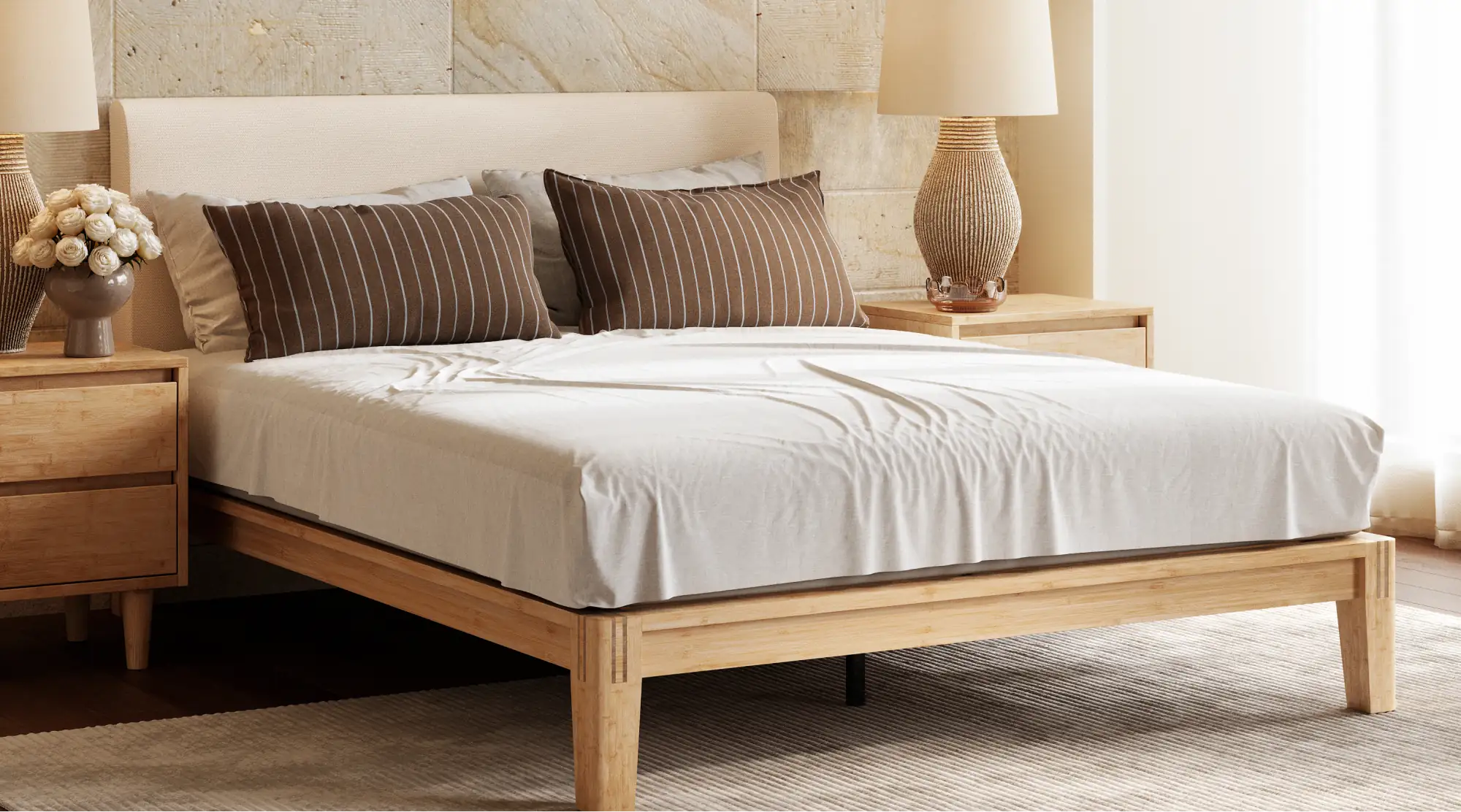
Platform beds are defined by a solid or slatted base that sits close to the floor — typically 12 to 18 inches from ground to sleeping surface — that requires no box spring. The low profile gives bedrooms a clean, contemporary look, and the solid support means almost any mattress works on one without modification.Slat spacing matters more than most buyers realize. Slats set more than three inches apart can allow a foam or hybrid mattress to sag into the gaps over time, which affects both comfort and longevity. If you're going the platform route, look for slats spaced no more than two inches apart or a solid panel base.The tradeoff is clearance: a platform bed’s lower height makes under-bed storage nearly impossible, and getting in and out can feel like a low crouch if you have knee or hip issues. For taller sleepers or anyone who prefers a more traditional bed height, a platform might feel uncomfortably low without a thicker mattress to compensate.https://media.sienasleep.com/image/upload/v1783379096/bedframes-inline-3.webp

Panel Beds

Panel beds are the most common frame style in American bedrooms: a raised structure with a headboard, footboard, and side rails that holds a box spring and mattress combination. The added height (typically 24 to 30 inches total) makes them easier to get in and out of, and the box spring beneath the mattress provides a layer of foundational support and some shock absorption.For people upgrading from an older setup, the panel bed is often the familiar default. It's worth knowing, though, that many modern hybrid and foam mattresses are specifically designed to perform without a box spring. Pairing a newer mattress with a traditional box spring can sometimes add height you didn't account for, or introduce unnecessary bounce under a mattress that was engineered for a firmer foundation.

Storage Beds

Storage beds are built around one of two mechanisms: drawers that pull out from the sides, or a hydraulic lift system that raises the entire mattress platform to reveal a large cavity underneath. Both solve the same problem — the square footage lost to under-bed dead space — but they work differently in practice.Drawer storage is more accessible, easier to operate, and better suited to items you use regularly (extra linens, seasonal clothing, spare pillows). The hydraulic lift opens up the full footprint beneath the mattress, which is useful for storing larger, less-frequently accessed items, though you have to remove everything on the mattress to lift it.Some storage frames add meaningful height to the bed — sometimes four to six inches above a standard platform — so measure your room's visual proportions before committing. The added bulk of storage drawers can sometimes feel heavy in a smaller bedroom.https://media.sienasleep.com/image/upload/v1783379096/bedframes-inline-2.webp

Adjustable Bases

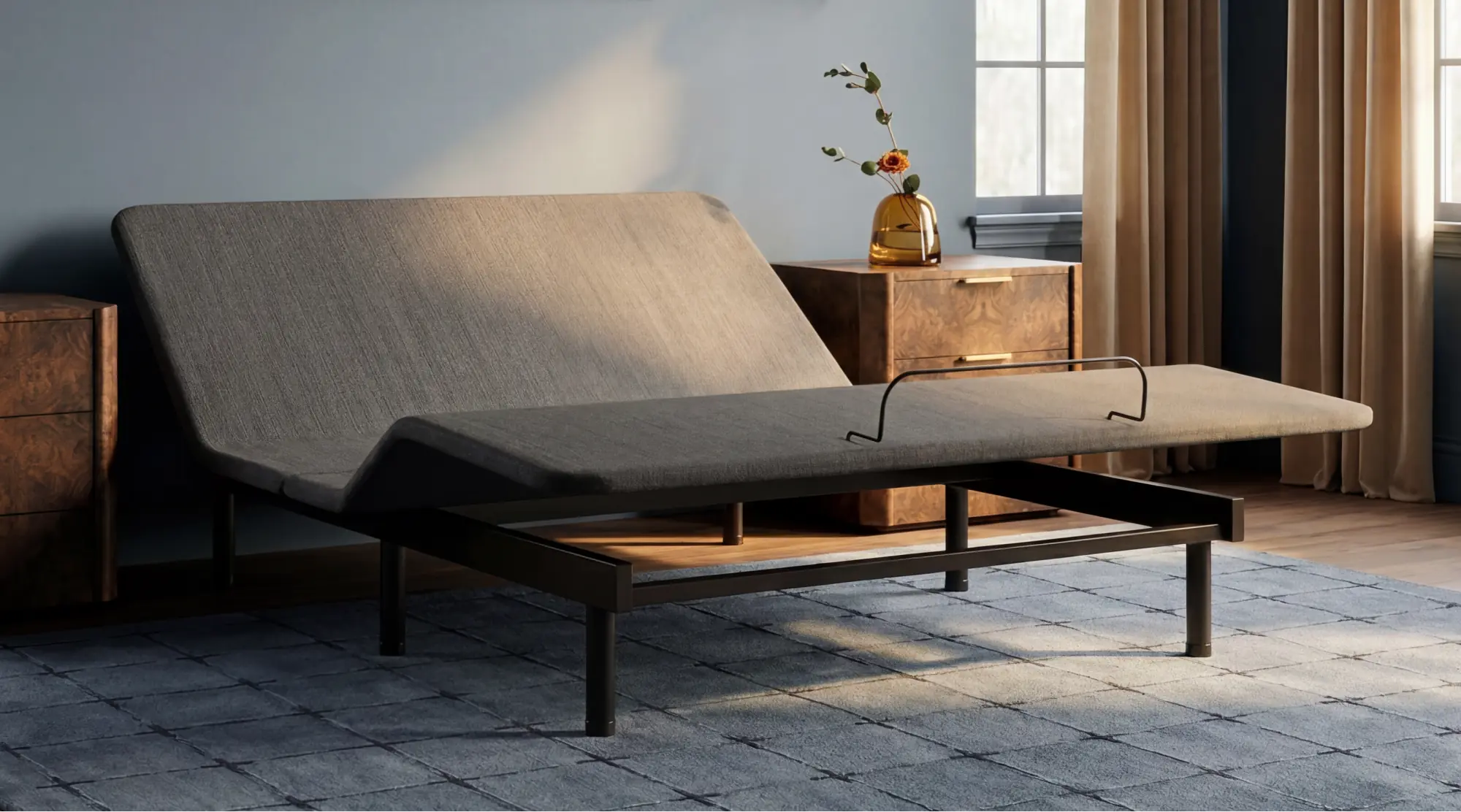
An adjustable base isn't technically a bed frame — it's a motorized foundation that replaces the box spring or platform in an existing frame, or stands independently with optional leg sets. The base often raises the head and foot sections independently, letting you dial in the exact angle that works for your back, your breathing, or your Netflix habit.For sleepers who deal with lower back discomfort, acid reflux, or snoring, an adjustable base can make a meaningful difference in how you feel overnight. The key is mattress compatibility: you need a flexible foam or hybrid mattress to get the full range of movement. A traditional innerspring won't flex properly and can be damaged if bent repeatedly.All DreamCloud mattresses are built to work with adjustable bases, with our CloudQuilt™ comfort layer moving with the base rather than against it — something you notice most in the shoulder and hip zones where the foam does most of its work.

Not sure which mattress fits you best? Find out now.

Canopy and Four-Poster Beds

Four-poster beds have corner posts that rise well above the mattress; canopy beds extend those posts with a horizontal frame overhead that can support curtains, fabric panels, or simply the architectural look of the structure itself. Both add considerable visual weight to a room and work best in larger spaces where the ceiling height and square footage can carry them.From a purely functional standpoint, the mattress rests on a standard platform or box-spring setup within the frame — so performance is unchanged. The choice is purely aesthetic, though it's worth noting that tall post structures can feel imposing in rooms under eight feet, and that moving one requires full disassembly.

Sleigh Beds

Sleigh beds get their name from the curved, scrolled headboard and footboard that echo the shape of a traditional horse-drawn sleigh. The silhouette is substantial — they tend to read as formal and traditionally American or French in style — and the footboard in particular sits high enough that it can feel restrictive if you tend to shift your position frequently or sleep with your feet near the edge.Solid wood sleigh beds are heavy and long-lasting; upholstered versions in linen or velvet read softer but can require more maintenance. Either way, a sleigh bed announces itself in a room, which is a feature if your bedroom is built around a statement piece and a friction point if you want something more understated.

Daybeds, Trundles, and Bunks

These three types serve specific spatial or functional situations rather than representing a default bedroom choice.Daybeds run lengthwise against a wall and function as both seating and sleeping surface — common in guest rooms, home offices, or studio apartments where the space needs to work harder than a standard bed allows. They fit a twin or full mattress and work well with firmer foam options that hold their shape under the pressure of sitting.Trundle beds add a second sleeping surface that slides out from beneath the primary frame. They're purpose-built for households with children or frequent overnight guests and almost always take a twin mattress on the lower level.Bunk beds stack two sleeping surfaces vertically, which makes them one of the more efficient uses of square footage available. The upper bunk requires a low-profile mattress — typically six to eight inches — to preserve safe clearance from the ceiling and from the guard rail.

How to Choose the Right Type of Bed

The frame you need depends on three overlapping questions: What kind of mattress are you pairing it with? How do you actually use your bedroom? And what does the room itself require?If you're pairing a modern hybrid or foam mattress — one built around individual coil layers, pressure-relieving foam, or a quilted cover system — a low-clearance platform with close-set slats will give the mattress the firm, even support it was designed for. A box spring adds height and some flex, which can work, but many contemporary mattresses don't need it and perform better without the extra give underneath.For sleepers with specific physical needs — back sensitivity, circulation issues, reflux — an adjustable base is worth considering early in the process, before you've committed to a frame that can't accommodate one.Shop DreamCloud’s adjustable bases.If storage is a genuine priority rather than a nice-to-have, build it into the bed rather than adding it around it. Under-bed storage drawers reclaim real square footage without requiring anything extra.And if the bedroom is the room you're most intentional about — the one where the look and feel actually matter to you — the frame style is worth the same consideration as the mattress itself. A sleigh bed or canopy structure shapes how a room reads; a platform bed largely disappears into it. Neither is better. They're just different decisions.Shop DreamCloud’s bed frames.

What Comes Next

Once the frame is sorted, the mattress question follows immediately — and the answers are more personal than most buying guides suggest. What matters is what the mattress needs to do for your specific body and sleep habits, not what a generic firmness scale says you should want.If you're replacing both the frame and the mattress at the same time, start with the frame type to establish your height, support base, and storage requirements, then let those parameters guide the mattress decision. Explore our full mattress lineup at DreamCloud Mattresses — and if you're not sure where to start, the CloudQuilt™ Classic is the right reference point for most sleepers.

Frequently Asked Questions

What is the most popular type of bed frame? Panel beds remain the most common choice in American bedrooms — they work with traditional box springs, sit at a comfortable height for most sleepers, and are widely available across price points. Platform beds have grown significantly in popularity as box-spring-free mattresses have become the norm.Do I need a box spring with my bed frame? Not necessarily. Platform beds and most adjustable bases are designed to work without a box spring. If you have a foam, latex, or hybrid mattress, a solid or closely-slatted platform typically provides better, more even support than a box spring. Box springs are most relevant for traditional innerspring mattresses or panel beds designed around them.What type of bed is best for back pain? Adjustable bases allow you to raise the head and foot independently, which can reduce pressure on the lower back for some sleepers. Beyond the frame, the mattress itself plays a larger role — look for something that supports spinal alignment in your usual sleep position. If back discomfort is persistent, it's worth speaking with a healthcare provider about what sleep position and support level is appropriate for your situation.What is the difference between a platform bed and a panel bed? A platform bed sits close to the floor on a solid or slatted base and requires no box spring. A panel bed has a raised frame — headboard, footboard, and side rails — and typically holds a box spring beneath the mattress. Platform beds suit modern mattresses and lean contemporary; panel beds offer more height and a traditional look.Can I use any mattress on any type of bed frame? Mostly, with some exceptions. Foam and hybrid mattresses work well on platform frames with tight slat spacing. Adjustable bases require a flexible mattress (foam or hybrid) — traditional innersprings don't bend properly. Memory foam mattresses used in bunk beds should be lower-profile to maintain safe ceiling clearance. When in doubt, check the mattress manufacturer's recommendations for foundation type.