Mattresses
Published June 2, 2026
9 minMattress Thickness: How Thick Should a Mattress Be?
What that number on the spec sheet means for how your mattress actually feels

Table of contents
What Mattress Layers Actually DoMattress Thickness Ranges ExplainedWhat Thickness Means for Frame Fit and Adjustable BasesHow Thick Are DreamCloud Mattresses?The Right Thickness for the Way You SleepFrequently Asked Questions
Mattress thickness is one of those specs that's easy to notice and surprisingly hard to interpret. A 14-inch mattress isn't simply a taller version of a 10-inch one. The difference between them comes down to how those extra inches are distributed across the layers inside, and determines feel, support, and how your mattress holds up over time. This guide breaks it down.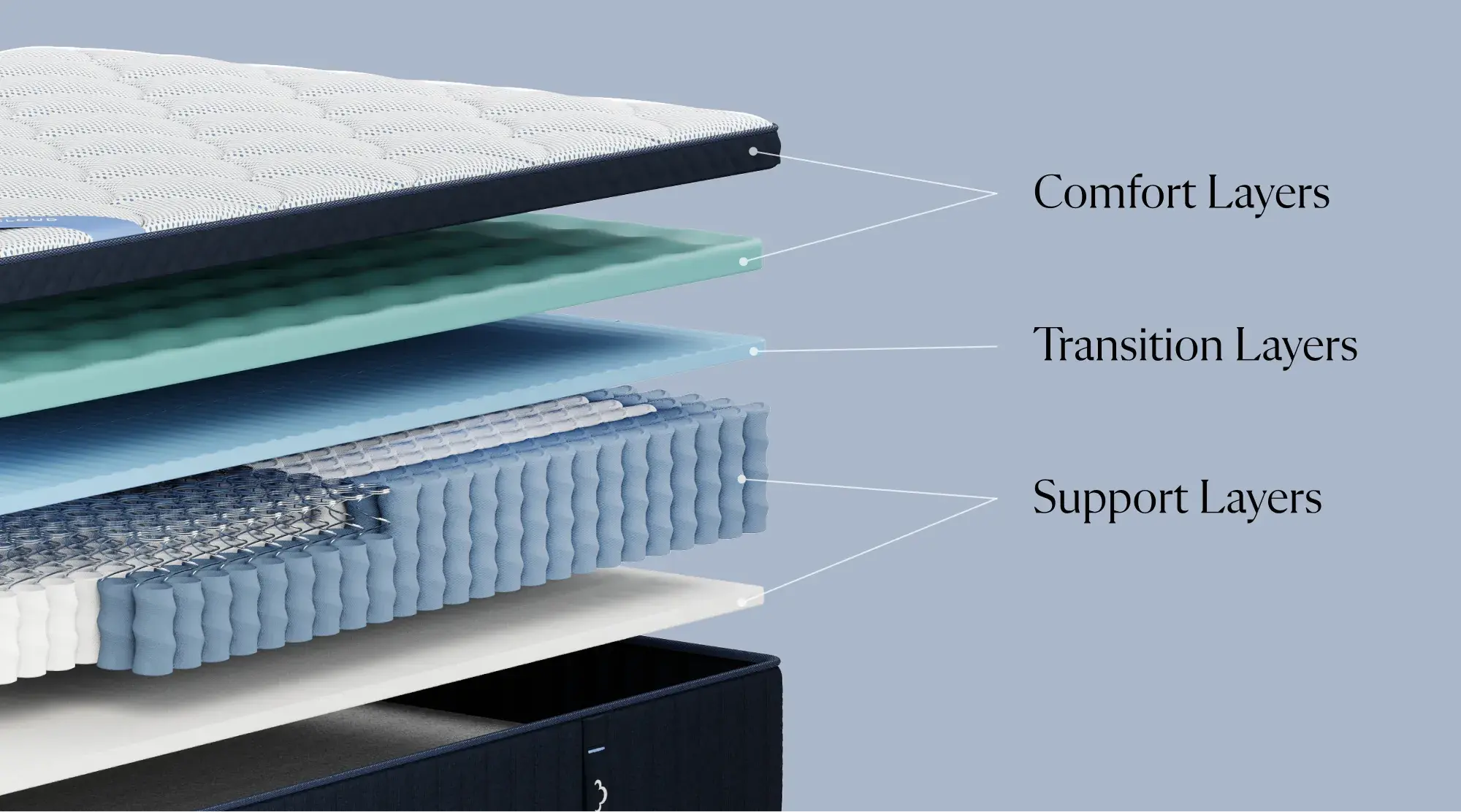
What Mattress Layers Actually Do
Most mattresses are built with three main sections: a comfort layer at the top, a transition layer in the middle, and a support core at the base. Thickness is determined by how much material goes into each of those sections — and which sections a manufacturer chooses to invest in.The comfort layer is where feel lives. This is the foam, memory foam, latex, or quilted fill that you're in direct contact with, and it's what makes a mattress feel soft, medium, or firm to the touch. Thicker comfort layers tend to offer more contouring and pressure relief, while thinner ones deliver a firmer, more responsive surface with less give.The transition layer sits between the comfort and support sections, moderating how far you sink and how much pushback you feel from the core below. Not all mattresses include a distinct transition layer — some move directly from comfort to core — but when it's present, it tends to smooth out the feel and extend the life of the comfort material above it.The support core is the structural foundation. In a hybrid mattress, this is the coil system; in a foam mattress, it's a high-density foam base. The core is what determines long-term durability and the baseline support the mattress delivers, regardless of what's layered above it.Not sure which mattress fits you best? Find out now.
Mattress Thickness Ranges Explained
Mattresses typically fall into one of three thickness ranges, each with different benefits and trade-offs.Thin (6–8 inches)
Thin mattresses are primarily suited for guest beds, bunk beds, trundles, and specific adjustable base setups that require a more flexible profile. At this thickness, the comfort layer is minimal, which means these mattresses offer functional support without much contouring or pressure relief, and tend to show wear sooner than thicker options. For a primary sleeping surface used nightly, 8 inches is generally the thinnest we would recommend.Medium (10–12 inches)
The 10-to-12-inch range is where most quality mattresses live. There's enough room for a meaningful comfort layer, a support core with real durability, and a feel that varies by design rather than by what's been left out. Medium-thickness mattresses tend to work well across sleep positions, are compatible with most standard bed frames, and fit standard deep-pocket sheets without issue.Thick (12 inches and above)
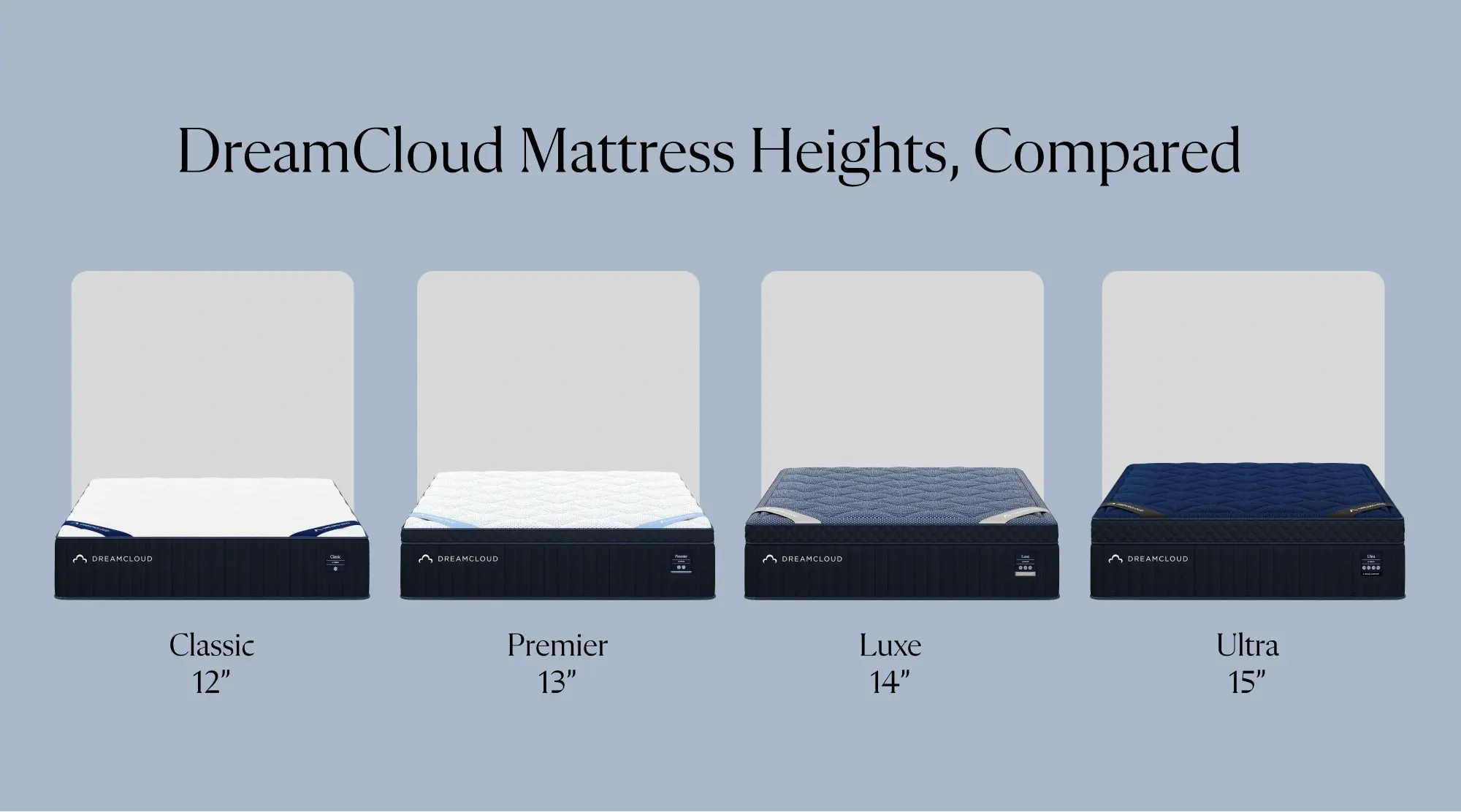
Mattresses in this range have room for more substantial comfort layers, higher coil counts in hybrid designs, and better isolation between sections. For side sleepers who need more contouring at the shoulders and hips, or for heavier-body sleepers who can compress a thinner mattress more quickly, added thickness can make a meaningful difference in how the mattress performs — not just initially, but over the years. Important to note: at 13 to 14 inches, a mattress also sits higher off the ground, which matters for ease of getting in and out of bed, frame clearance, and sheet depth.What Thickness Means for Frame Fit and Adjustable Bases
A mattress's thickness affects more than how it feels — it also determines how it interacts with the bed it's sitting on.For standard platform frames, the main consideration is finished height. A 14-inch mattress on a platform frame with an 8-inch profile puts the sleeping surface at 22 inches, which is closer to a natural sitting height when the full frame height is factored in. For most adults, a total bed height somewhere between 24 and 28 inches tends to feel comfortable, so it's worth factoring in mattress thickness when pairing with a taller or shorter frame.For adjustable bases, thickness has a different implication. Most adjustable bases work well with mattresses in the 10-to-14-inch range, since there's enough material in the comfort layers to flex with the base without stressing the support core. Very thin mattresses can feel rigid on an adjustable base, while particularly stiff core constructions may not articulate as smoothly at the head and foot. The sweet spot for adjustable base compatibility tends to be a hybrid or foam mattress in the 12-to-14-inch range, where the comfort layers have enough depth to move naturally with the base.Sheet fit is worth checking too. Mattresses above 12 inches typically require deep-pocket or extra-deep-pocket sheets; standard sheets may not stay tucked at the corners, particularly after a few washes.