Sleep Health
Published March 8, 2023
7 minHow to Stay Asleep All Night: 11 Easy Tips to Follow
Are you tired of waking up in the middle of the night? Do you feel groggy and irritable throughout the day due to a lack of restful sleep? You're not alone.
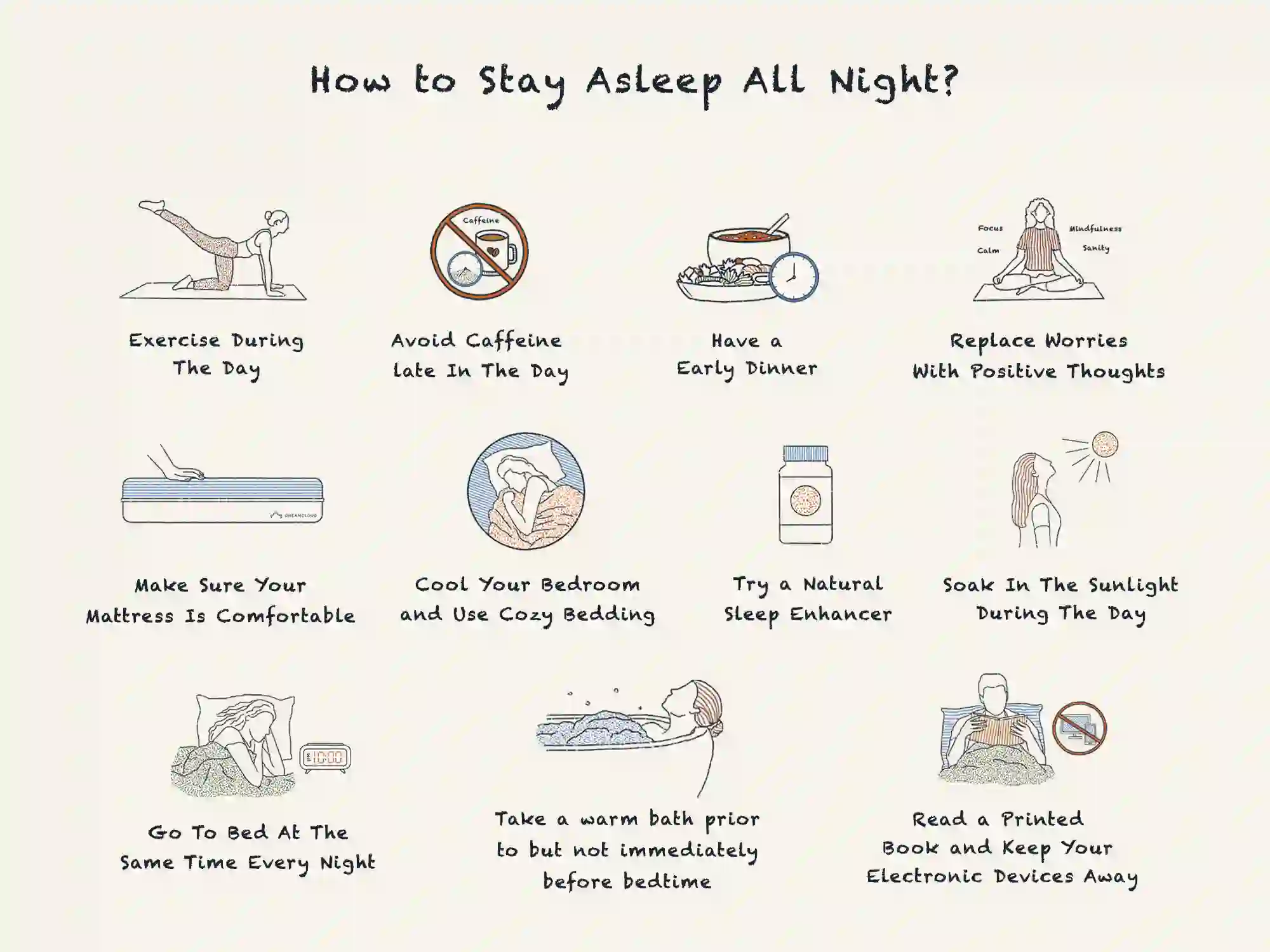
Table of contents
Why Do You Wake Up At Night?Physical Causes Psychological CausesYour Sleep HabitsYour Sleep EnvironmentYour Sleep EnvironmentSleep DisordersTips to Stay Asleep All NightConclusion
Are you tired of waking up in the middle of the night? Do you feel groggy and irritable throughout the day due to a lack of restful sleep? You're not alone.Many people struggle to stay asleep all night, which can significantly impact their overall health and well-being . However, with a few simple changes to your daily routine, you can improve your sleep quality and stay asleep all night long.In this article, we'll explore some practical strategies and techniques that you can use to promote better sleep.So if you're ready to say goodbye to restless nights and hello to restful slumber, read on to discover how to stay asleep all night. Regular exercise can help you fall asleep faster and stay asleep longer. Just finish your workout a few hours before bedtime to give your body time to wind down. As long as you refrain from strenuous physical activity for at least an hour before going to bed, you can exercise in the evening too.2. Avoid caffeine late in the day
 Caffeineis a stimulant that can interfere with your ability to fall and stay asleep. It is swiftly absorbed and disseminated throughout your entire body, including the brain. It mainly induces its classic outcome of promoting wakefulness and alertness . Opt for non-caffeinated beverages instead.3. Have an early dinner
 Eating a heavy meal right before bed can interfere with your sleep. Your body needs time to digest food, so have dinner at least three hours before bedtime. Opt for a light snack instead of a full meal if you're hungry before bed.4. Take a warm bath prior to but not immediately before bedtime
 Taking a warm bath before bed can help you relax and prepare for sleep. It raises your body temperature, and you feel more relaxed and drowsy as it cools down. However, leaving enough time between your bath and bedtime is essential for your body to cool down , as a hot body temperature can make it harder to fall asleep.5. Try a natural sleep enhancer
 Some natural sleep enhancers, such as melatonin or valerian root , may help you fall asleep faster and stay asleep longer. Talk to your healthcare provider before trying any new sleep aids.6. Go to bed at the same time every night
 Going to bed and waking up at the same time every day can help regulate your body's sleep-wake cycle. Your body gets used to a regular sleep schedule, so try to stick to the same bedtime and wake-up time, even on weekends.7. Read a printed book and keep your electronic devices away
 The blue light emitted by electronic devices, such as smartphones, tablets, and laptops, can interfere with your body's production of melatonin , making it harder to fall asleep. Instead, try reading a printed book before bed.8. Make sure your mattress is comfortable
 A comfortable mattress and pillows can make a big difference in the quality of your sleep. If your mattress is old or uncomfortable, consider investing in a new one that provides proper support.9. Cool your bedroom and use cozy bedding
 Your body temperature drops during sleep, so keeping your bedroom cool can help you fall and stay asleep. The ideal temperature for sleep is 60 to 67° F.10. Replace worries with positive thoughts
 If you find yourself worrying or ruminating before bed, try to replace those thoughts with positive ones.11. Soak in the sunlight during the day
 Exposure to natural sunlight during the day can help regulate your body's sleep-wake cycle, making it easier to fall asleep at night. Try to spend time outside during the day or open your curtains and blinds to let natural light into your home.
Why Do You Wake Up At Night?
Several factors can contribute to waking up during the night. Understanding the underlying causes of your sleep disturbance can help you identify practical solutions to how to sleep longer. Here are some common reasons why people wake up at night:Physical Causes
Several physical causes can disrupt your sleep and cause you to wake up at night. These may include:- Gastroesophageal reflux disease (GERD): This digestive disorder causes stomach acid to flow back into the esophagus, causing discomfort and interrupting sleep .
- Chronic obstructive pulmonary disease (COPD): A group of lung diseases that cause breathing difficulties and can interrupt sleep .
- Chronic pain: Conditions such as arthritis, back pain, and fibromyalgia can cause discomfort and make it difficult to get comfortable enough to sleep through the night.
- Menopause: Hormonal changes during menopause can cause hot flashes, night sweats, and other symptoms that disrupt sleep.
Psychological Causes
In addition to physical causes, psychological factors can also contribute to waking up at night. Some common psychological causes of sleep disturbance include:- Anxiety: Excessive stress can lead to racing thoughts and difficulty falling and staying asleep.
- Depression: This mood disorder can cause insomnia , early morning awakening, or interrupted sleep.
- Post-Traumatic Stress Disorder (PTSD): Traumatic experiences can lead to nightmares, flashbacks, and sleep disturbances .
- Bipolar disorder: People with bipolar disorder may experience insomnia during manic episodes and oversleeping during depressive episodes.
Your Sleep Habits
Some common sleep habits that can interfere with sleep and cause nighttime awakenings include:- Irregular sleep schedule: Going to bed and waking up at different times each day can disrupt your body's internal clocks , making it harder to stay asleep all night.
- Electronic devices: The blue light emitted by electronic devices such as smartphones and tablets can interfere with your body's production of melatonin , a hormone that regulates sleep.
- Caffeine and alcohol consumption: Consuming caffeine or alcohol too close to bedtime can interfere with your ability to fall and stay asleep.
Your Sleep Environment
The physical environment in which you sleep can also play a role in waking up at night. Some factors to consider when evaluating your sleep environment include:- Temperature: Your bedroom should be cool but not cold, between 60-67 degrees Fahrenheit .
- Bedding and mattress: A comfortable mattress and bedding that suit your sleep preferences can help you stay asleep all night.
- Light: Darkness is important for promoting natural sleep as it stimulates the pineal gland to secrete melatonin , so consider using blackout curtains or an eye mask to block out light.
Your Sleep Environment
The physical environment in which you sleep can also play a role in waking up at night. Some factors to consider when evaluating your sleep environment include:- Mutations: Mutations or changes in certain genes can affect our biological clocks.
- Electronic devices: Light from electronic devices at night can confuse our biological clocks.
- Jet lag: Rapidly traveling across time zones can disrupt your body's natural sleep-wake cycle, causing insomnia and daytime sleepiness.
- Shift work: People who work night shifts or rotating shifts may have difficulty maintaining a regular sleep-wake cycle due to irregular work schedules.
Sleep Disorders
Several sleep disorders can cause nighttime awakenings, including:- Sleep apnea: A condition in which breathing is repeatedly interrupted during sleep, leading to frequent awakenings.
- Restless legs syndrome (RLS): A sleep disorder that causes uncomfortable sensations in the legs and an irresistible urge to move them, which can disrupt sleep.
- Periodic limb movement disorder (PLMD): A sleep disorder in which a person's legs or arms jerk or move involuntarily during sleep, causing frequent awakenings and sleep disruption.
Tips to Stay Asleep All Night
If you're having trouble figuring out how to sleep through the night without waking up, try incorporating these tips into your routine and get your answers to how to stay asleep longer:1. Exercise during the dayRegular exercise can help you fall asleep faster and stay asleep longer. Just finish your workout a few hours before bedtime to give your body time to wind down. As long as you refrain from strenuous physical activity for at least an hour before going to bed, you can exercise in the evening too.2. Avoid caffeine late in the dayCaffeineis a stimulant that can interfere with your ability to fall and stay asleep. It is swiftly absorbed and disseminated throughout your entire body, including the brain. It mainly induces its classic outcome of promoting wakefulness and alertness . Opt for non-caffeinated beverages instead.3. Have an early dinnerEating a heavy meal right before bed can interfere with your sleep. Your body needs time to digest food, so have dinner at least three hours before bedtime. Opt for a light snack instead of a full meal if you're hungry before bed.4. Take a warm bath prior to but not immediately before bedtimeTaking a warm bath before bed can help you relax and prepare for sleep. It raises your body temperature, and you feel more relaxed and drowsy as it cools down. However, leaving enough time between your bath and bedtime is essential for your body to cool down , as a hot body temperature can make it harder to fall asleep.5. Try a natural sleep enhancerSome natural sleep enhancers, such as melatonin or valerian root , may help you fall asleep faster and stay asleep longer. Talk to your healthcare provider before trying any new sleep aids.6. Go to bed at the same time every nightGoing to bed and waking up at the same time every day can help regulate your body's sleep-wake cycle. Your body gets used to a regular sleep schedule, so try to stick to the same bedtime and wake-up time, even on weekends.7. Read a printed book and keep your electronic devices awayThe blue light emitted by electronic devices, such as smartphones, tablets, and laptops, can interfere with your body's production of melatonin , making it harder to fall asleep. Instead, try reading a printed book before bed.8. Make sure your mattress is comfortableA comfortable mattress and pillows can make a big difference in the quality of your sleep. If your mattress is old or uncomfortable, consider investing in a new one that provides proper support.9. Cool your bedroom and use cozy beddingYour body temperature drops during sleep, so keeping your bedroom cool can help you fall and stay asleep. The ideal temperature for sleep is 60 to 67° F.10. Replace worries with positive thoughtsIf you find yourself worrying or ruminating before bed, try to replace those thoughts with positive ones.11. Soak in the sunlight during the dayExposure to natural sunlight during the day can help regulate your body's sleep-wake cycle, making it easier to fall asleep at night. Try to spend time outside during the day or open your curtains and blinds to let natural light into your home.