Sleep Health
Published July 30, 2022
6 minWhat is a Coffee Nap? How Long Should a Coffee Nap Be?
Coffee and nap is a completely counterproductive combination. Then what is a coffee nap? Sometimes a cup of coffee is exactly what you need before a quick nap. We often feel fatigued but have too much
Table of contents
What is a caffeine nap? Efficacy of Coffee Naps: What Scientific Studies Say How to Take a Coffee Nap Duration of a Coffee Nap Benefits & Limitations of Coffee Naps Frequently Asked Questions
Coffee and nap is a completely counterproductive combination. Then what is a coffee nap? Sometimes a cup of coffee is exactly what you need before a quick nap. We often feel fatigued but have too much on our plate. Gulping a cup of coffee before a nap of 20 minutes or so will pump up your energy levels. Research states that this is possible because of the presence of adenosine in caffeine , that aids in peaceful sleep. Let us unravel more about how a coffee power nap will act as an energy booster.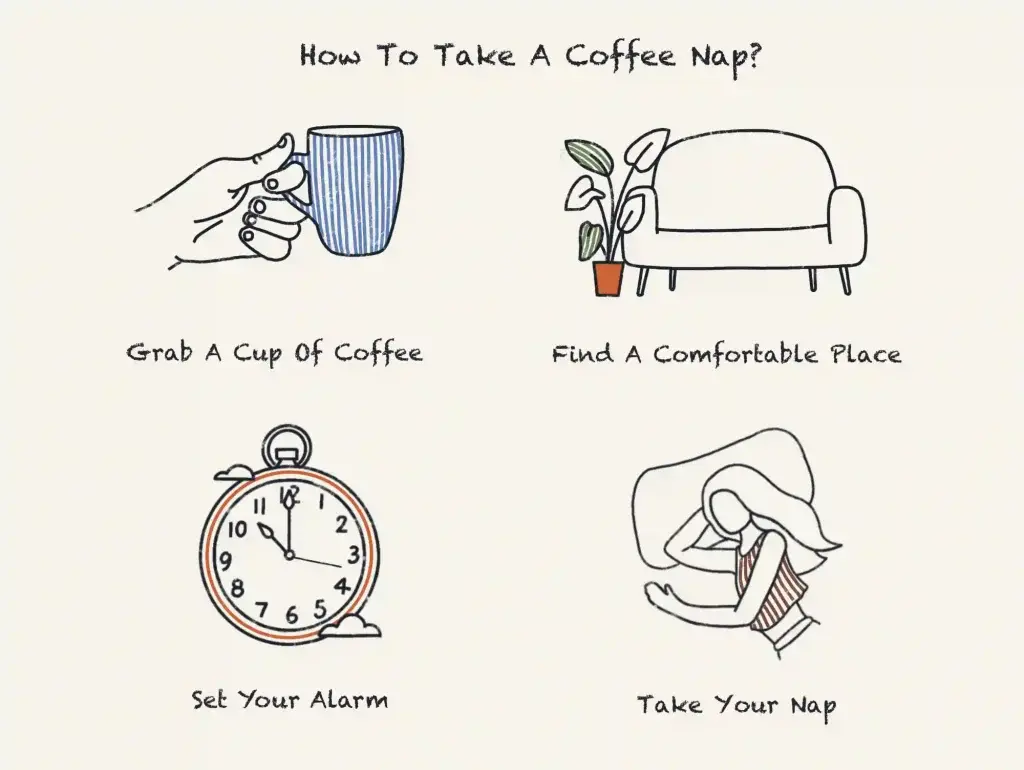
What is a caffeine nap?
A caffeine nap or coffee nap is consuming coffee and instantly lying down for a 20 minutes nap. The napping duration shouldn’t surpass 20 minutes, otherwise, it might risk you going to deep sleep. And, that will further lead to a dazed feeling and discredit all the usefulness you would otherwise have experienced. If, in any case, you are time bound and unable to opt for a 20 minutes nap, 15 minutes will also do.Efficacy of Coffee Naps: What Scientific Studies Say
The concept of a caffeine power nap tends to be promising. Moreover, certain researchers and scientists have worked on the fact that a coffee nap is more effective than either a coffee or a nap alone. Though the number of studies conducted behind finding if drinking coffee before sleep is actually fruitful, the results have all been positive to date.One study was conducted on 12 sleep individuals who consumed 200 mg of caffeine, followed by a power nap of 15 minutes. After they were seated on a driving simulator for two hours, 91% of the time, those people experienced less sleepiness than those who didn’t have a coffee nap. Moreover, even if they didn't sleep during that period and just stayed half-asleep, this will hold valid. Another study was conducted on 10 young healthy adults where a coffee nap resulted in developing their computer tasks. Again, this would not have been possible if undergone a normal nap, or a nap followed by exposure to radiant light, a nap followed by face washing, or even after no nap at all.How to Take a Coffee Nap
Since the effectiveness of a coffee nap is quite high, let us check out how to sleep after caffeine.- Grab a Cup of Coffee
- Find a Comfortable Place
- Set Your Alarm
- Take Your Nap
Duration of a Coffee Nap
The whole fact about a coffee nap depends greatly on the duration of sleep. Brief nap times of 15 to 20 minutes are enough for the coffee to disintegrate and get delivered to your brain. Napping for those 15 to 20 minutes will help clear the adenosine from the brain, and let the coffee settle down in your brain receptors more effectively. Another reason behind setting your alarm for only 20 minutes during a coffee nap is to risk going into a deep sleep. Once you suddenly wake up from a state of deep sleep, you might feel groggy.Best Time Of The Day For A Coffee Nap
Many of us experience a fall in energy level during mid-days, and that is the perfect time for a coffee nap. But, if you feel fatigued during the morning, proceed with your coffee nap then. But, the only thing to consider here is not consuming caffeine before bedtime. It is generally recommended to consume it 6 hours before bedtime.Benefits & Limitations of Coffee Naps
Drinking coffee before sleep has certain benefits and limitations.Benefits:
- Increase in efficiency and energy levels
- No drowsiness post waking up
- Improved performance in computer tasks
- Great way to boost energy during the afternoon slump
Limitations:
- Mixing sugar or added flavors in the coffee might reduce the effectiveness of a coffee nap
- Though excessive caffeine intake might lead to restlessness, muscle tremors, anxiety,
- Consumption of caffeine in less than 6 hours of bedtime might affect sleep quality