Sleep Health
Published January 31, 2023
10 min16 Tips on How to Sleep With a Stuffy Nose
Winter chills bring less humidity, and drier air can make you susceptible to cold, leading to a blocked nose. And if you are frustrated with a stuffy nose at night hindering your resting hours, you la
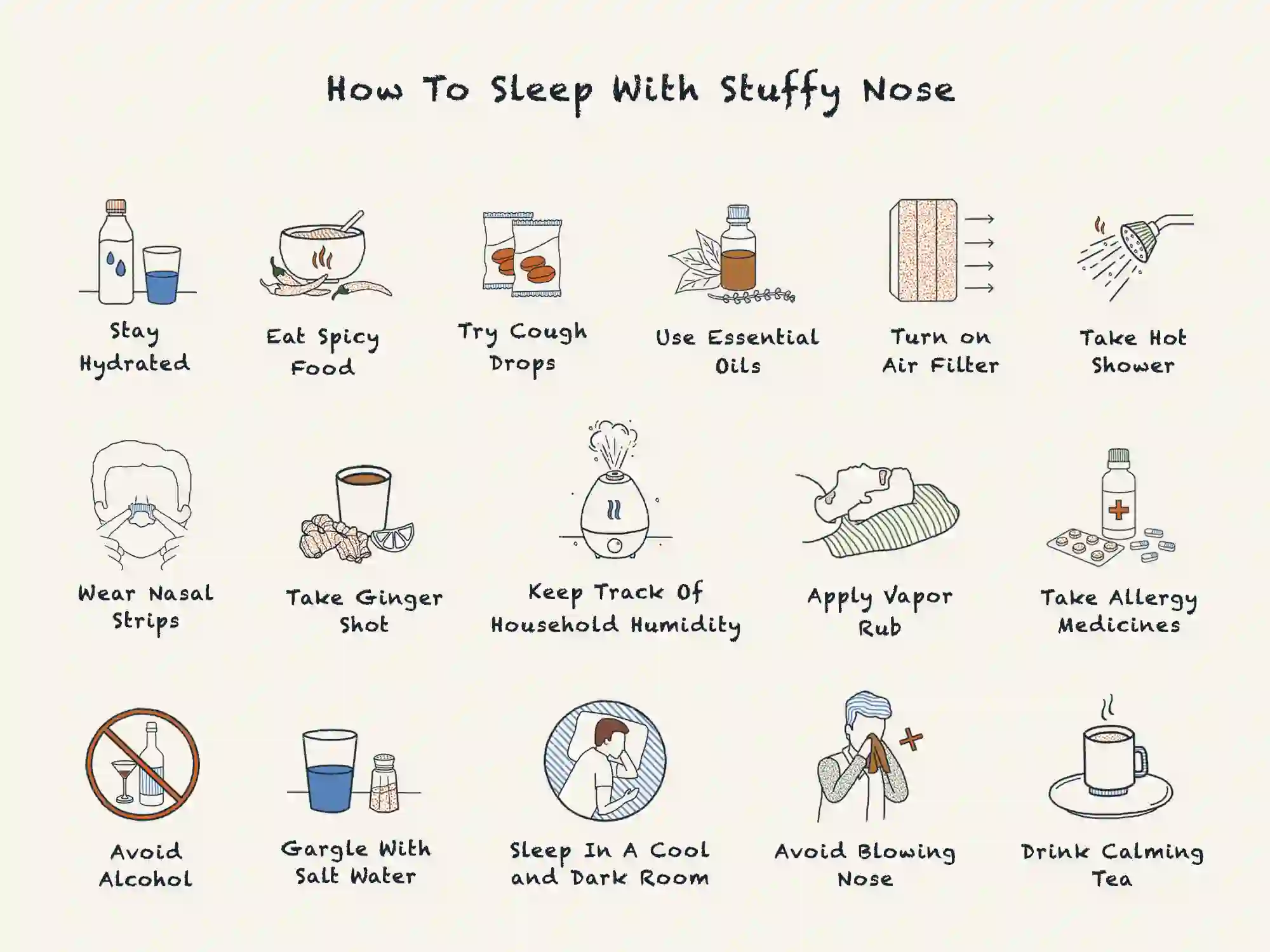
Table of contents
Stay Hydrated Eat Spicy Foods Try Cough Drops Keep Track of Household Humidity Avoid Blowing Your Nose Avoid AlcoholDrink Calming Tea Take a Hot ShowerWear Nasal StripsTake Allergy MedicineTurn on the Air FilterGargle With Salt WaterTake a Ginger Shot Apply a Vapor RubUse Essential OilsSleep in a Cool, Dark RoomWhat Causes a Stuffy NoseWhen to See Your DoctorConclusion Frequently Asked Questions
Winter chills bring less humidity, and drier air can make you susceptible to cold, leading to a blocked nose. And if you are frustrated with a stuffy nose at night hindering your resting hours, you landed on the right article. Sleep is vital for recovering from ailments that are causing you a stuffy nose at night; any disturbance can hinder the recovery process. So keep reading further to know how to sleep with a stuffy nose and tick out some of its causes. Water is lost through sweat, urine, stool, and tears. But did you know besides urinary and kidney problems, dehydration can also trigger colds and a blocked nose ? When a person is dehydrated, the mucus inside the sinuses becomes thick, making it harder for the cilia– hair-like projections that help clear out debris, bacteria, and viruses, to push the mucus along. Staying hydrated will allow the cilia to do their job by helping loosen up the mucus inside the nose.
 Consuming something hot is another answer to a stuffy nose at night. Jonathan Bernstein, MD, a University of Cincinnati allergy researcher, explains that hot chili peppers may help clear specific sinus inflammation. Chilies contain a component called capsaicin, which produces a hot sensation, and is one of the active ingredients in many topical medications used for temporary pain relief. And the study concluded that people who used a nasal spray with Capsicum reported faster relief than the control group.
 For people trying to sleep with a blocked nose that is probably associated with the common cold, try cough drops. Menthol is a common ingredient used in various medications, including as a constituent remedy for colds associated with acute upper respiratory tract infections and allergies. However, even though Menthol is often employed in the medicines used for treating common cold, they do not decongest. Instead, they provide an increased sensation of nasal airflow, which helps make breathing easier during the common cold.
 Keeping the house humidified is another great way to treat a stuffy nose at night. A humidifier can increase the air's moisture, eliminating the dry air that can irritate the nose and throat airways. Humidified air can help relieve colds, flu, and stuffy nose by loosening up the mucus. However, there are certain factors to remember when using a humidifier:
 You may think that the easiest way on how to sleep with a stuffy nose is by having a good blow, but in rare cases blowing your nose may cause more adverse effects than you expect. Experts explain that blowing your nose creates pressure that can cause severe headaches from the force, rupture of the esophagus, fracture in the base of eye sockets , or it can force air into the tissue between the two lobes of the lung.
 Besides affecting sleep quality, drinking alcohol before bed when you have a stuffy nose can worsen the symptoms of congestion. Ingesting alcohol can reduce the amount of ADH– a hormone that helps blood vessels constrict and helps the kidneys control the amount of water and salt the body makes, subsequently increasing the amount of urine production. This causes the body to lose water, which can affect congestion. What's more, it can also weaken the immune system .
 Tea is quite a popular beverage, and with each passing day, the evidence regarding the health benefits of tea keeps increasing. For example, there is data showing the cancer-preventive properties of green and black tea. Similarly, drinking something hot, such as tea, with good antiviral, anti-inflammatory, and antioxidant properties, can help relieve nasal congestion.
 Warmness is always more comforting than cold when sick. Taking a hot bath or shower can help temporarily alleviate the congested nose. The steam and comforting temperature of the hot bath water loosen up the mucus, making it easier to breathe.
 Wearing a nasal strip is one of the easiest ways to breathe through a stuffy nose at night. The nasal strips are spring-like bands that fit right on the skin between the bridge and the tip of the nose. They work by lifting the outside of the nose to open the nostrils. This opens up the narrowest part of the nostril, thereby improving airflow. Research says that nasal strips can improve stuffy noses and sleep quality.
 Often stuffy nose can be due to allergic rhinitis or inflammation of the nasal passages. Varying symptoms like itching, sneezing, nasal congestion, runny nose, and postnasal drip can lead to such inflammation. Antihistamines , the carefully assessed medicine and adequately designed by the clinical trials for the treatment of congestion, can offer relief from consistent sneezing, congestion, and other allergy symptoms.
 Allergic rhinitis can be easily triggered by pollution and particles in the air, which can lead to a stuffy nose at night. And according to a research study , the use of air purifiers with HEPA filters (air purifiers equipped with high-efficiency particulate air designed to remove indoor pollutants that can trigger allergic rhinitis) significantly reduced medication requirements for patients with house dust mites-induced allergic rhinitis.
 Even though gargling with salt water may not help with the stuffy nose at night, it is still advisable to do so because it can help relieve sore throat and flush out toxins. Just remember to mix a quarter spoonful of salt in warm water.
 Ginger is a potent remedy used for thousands of years to treat numerous ailments, such as cold, nausea, migraines, and arthritis. Physicians have advised it because of its substantially beneficial effects. However, experts advise limiting the ginger intake to 3 to 4 grams a day because too much ginger can lead to heartburn and diarrhea.
 Vaporub is a menthol ointment containing ingredients like camphor and eucalyptus oil, which are associated with pain relief and other benefits. And as previously mentioned in the article, since Vaporub is a menthol ointment, they do not decongest the nostrils. But provide an increased nasal airflow sensation, making breathing easier with a stuffy nose at night.
 The antibacterial effect of essential oils is widely used in cosmetics, health care, traditional medicine, and the food industry, which could be one of the promising solutions for this global problem and the stuffy nose at night. They are a mixture of volatile compounds, meaning essential oils easily evaporate at normal temperatures. And essential oils like eucalyptus, tea tree, lemon, clove, peppermint, and rosemary are effective as aromatherapy agents.
 When a person is recovering from ailments, small things like the darkness in the room matter, humans have a built-in internal clock called circadian rhythm that keeps them active during the day and urges them to rest at night. And research has profoundly highlighted the negative impact of light on the quality and quantity of a person's sleep. Moreover, experts recommend sleeping in a dark room; if that's not possible, you can use blackout shades or eye masks. In addition to the light, try to keep the room temperature comfortable.
Stay Hydrated
Water is lost through sweat, urine, stool, and tears. But did you know besides urinary and kidney problems, dehydration can also trigger colds and a blocked nose ? When a person is dehydrated, the mucus inside the sinuses becomes thick, making it harder for the cilia– hair-like projections that help clear out debris, bacteria, and viruses, to push the mucus along. Staying hydrated will allow the cilia to do their job by helping loosen up the mucus inside the nose.Eat Spicy Foods
Consuming something hot is another answer to a stuffy nose at night. Jonathan Bernstein, MD, a University of Cincinnati allergy researcher, explains that hot chili peppers may help clear specific sinus inflammation. Chilies contain a component called capsaicin, which produces a hot sensation, and is one of the active ingredients in many topical medications used for temporary pain relief. And the study concluded that people who used a nasal spray with Capsicum reported faster relief than the control group.Try Cough Drops
For people trying to sleep with a blocked nose that is probably associated with the common cold, try cough drops. Menthol is a common ingredient used in various medications, including as a constituent remedy for colds associated with acute upper respiratory tract infections and allergies. However, even though Menthol is often employed in the medicines used for treating common cold, they do not decongest. Instead, they provide an increased sensation of nasal airflow, which helps make breathing easier during the common cold.Keep Track of Household Humidity
Keeping the house humidified is another great way to treat a stuffy nose at night. A humidifier can increase the air's moisture, eliminating the dry air that can irritate the nose and throat airways. Humidified air can help relieve colds, flu, and stuffy nose by loosening up the mucus. However, there are certain factors to remember when using a humidifier:- According to the American National Standards Institute , set the density of water vapor relative to room temperature is between 30% to 50% humidity.
- Use a cool mist humidifier.
- Clean the humidifier to decrease the chances of bacteria growth.
Avoid Blowing Your Nose
You may think that the easiest way on how to sleep with a stuffy nose is by having a good blow, but in rare cases blowing your nose may cause more adverse effects than you expect. Experts explain that blowing your nose creates pressure that can cause severe headaches from the force, rupture of the esophagus, fracture in the base of eye sockets , or it can force air into the tissue between the two lobes of the lung.Avoid Alcohol
Besides affecting sleep quality, drinking alcohol before bed when you have a stuffy nose can worsen the symptoms of congestion. Ingesting alcohol can reduce the amount of ADH– a hormone that helps blood vessels constrict and helps the kidneys control the amount of water and salt the body makes, subsequently increasing the amount of urine production. This causes the body to lose water, which can affect congestion. What's more, it can also weaken the immune system .Drink Calming Tea
Tea is quite a popular beverage, and with each passing day, the evidence regarding the health benefits of tea keeps increasing. For example, there is data showing the cancer-preventive properties of green and black tea. Similarly, drinking something hot, such as tea, with good antiviral, anti-inflammatory, and antioxidant properties, can help relieve nasal congestion.Take a Hot Shower
Warmness is always more comforting than cold when sick. Taking a hot bath or shower can help temporarily alleviate the congested nose. The steam and comforting temperature of the hot bath water loosen up the mucus, making it easier to breathe.Wear Nasal Strips
Wearing a nasal strip is one of the easiest ways to breathe through a stuffy nose at night. The nasal strips are spring-like bands that fit right on the skin between the bridge and the tip of the nose. They work by lifting the outside of the nose to open the nostrils. This opens up the narrowest part of the nostril, thereby improving airflow. Research says that nasal strips can improve stuffy noses and sleep quality.Take Allergy Medicine
Often stuffy nose can be due to allergic rhinitis or inflammation of the nasal passages. Varying symptoms like itching, sneezing, nasal congestion, runny nose, and postnasal drip can lead to such inflammation. Antihistamines , the carefully assessed medicine and adequately designed by the clinical trials for the treatment of congestion, can offer relief from consistent sneezing, congestion, and other allergy symptoms.Turn on the Air Filter
Allergic rhinitis can be easily triggered by pollution and particles in the air, which can lead to a stuffy nose at night. And according to a research study , the use of air purifiers with HEPA filters (air purifiers equipped with high-efficiency particulate air designed to remove indoor pollutants that can trigger allergic rhinitis) significantly reduced medication requirements for patients with house dust mites-induced allergic rhinitis.Gargle With Salt Water
Even though gargling with salt water may not help with the stuffy nose at night, it is still advisable to do so because it can help relieve sore throat and flush out toxins. Just remember to mix a quarter spoonful of salt in warm water.Take a Ginger Shot
Ginger is a potent remedy used for thousands of years to treat numerous ailments, such as cold, nausea, migraines, and arthritis. Physicians have advised it because of its substantially beneficial effects. However, experts advise limiting the ginger intake to 3 to 4 grams a day because too much ginger can lead to heartburn and diarrhea.Apply a Vapor Rub
Vaporub is a menthol ointment containing ingredients like camphor and eucalyptus oil, which are associated with pain relief and other benefits. And as previously mentioned in the article, since Vaporub is a menthol ointment, they do not decongest the nostrils. But provide an increased nasal airflow sensation, making breathing easier with a stuffy nose at night.Use Essential Oils
The antibacterial effect of essential oils is widely used in cosmetics, health care, traditional medicine, and the food industry, which could be one of the promising solutions for this global problem and the stuffy nose at night. They are a mixture of volatile compounds, meaning essential oils easily evaporate at normal temperatures. And essential oils like eucalyptus, tea tree, lemon, clove, peppermint, and rosemary are effective as aromatherapy agents.Sleep in a Cool, Dark Room
When a person is recovering from ailments, small things like the darkness in the room matter, humans have a built-in internal clock called circadian rhythm that keeps them active during the day and urges them to rest at night. And research has profoundly highlighted the negative impact of light on the quality and quantity of a person's sleep. Moreover, experts recommend sleeping in a dark room; if that's not possible, you can use blackout shades or eye masks. In addition to the light, try to keep the room temperature comfortable.