Sleep Health
Published March 7, 2022
8 minHow to clean a mattress (without ruining it)
The stain-specific steps that actually work, and the single mistake that turns most fixable problems into permanent ones.
Table of contents
What you'll needCleaning by stain typeHow to deodorize a mattressDeep cleaning the whole mattressHow often to clean your mattressThe cleaner mattress is usually the protected oneFrequently asked questions
Most people clean their mattress sparingly, usually after something goes wrong. The instinct in that moment is to scrub harder and apply more product, which tends to make things worse. A clean mattress actually requires less than you'd think, especially if you proceed in the right order.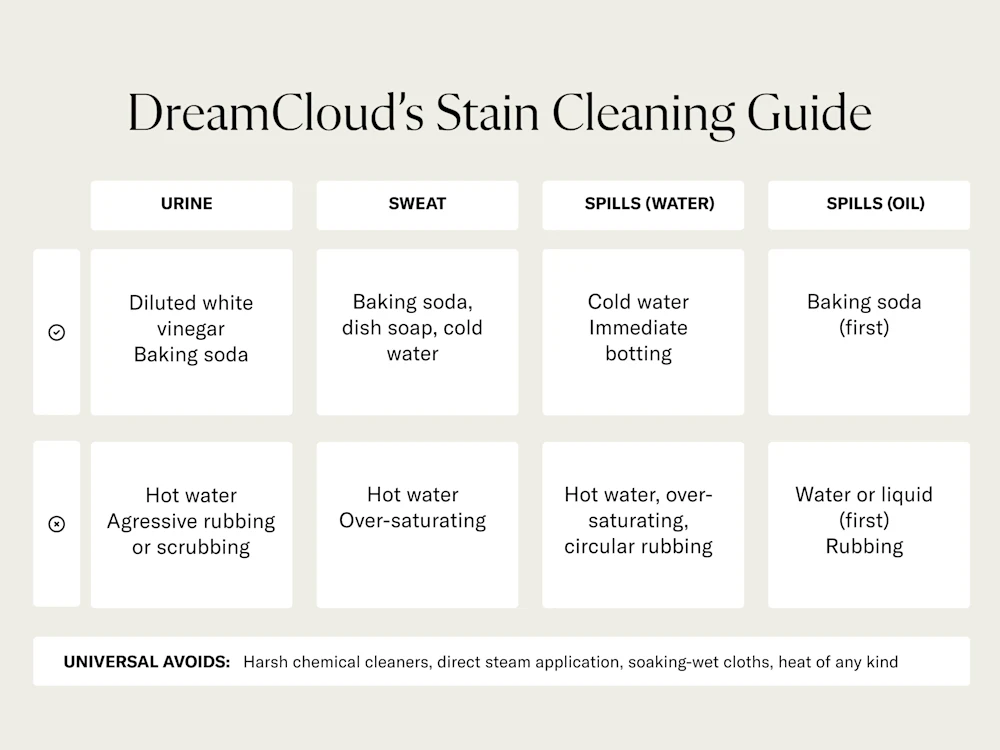
What you'll need
Before anything, gather your materials and set aside anything that’s too aggressive. Harsh cleaners, steam, and soaking-wet cloths are even harder on a mattress than most stains.You'll need:- Baking soda
- White vinegar (diluted 50/50 with cold water)
- A clean spray bottle
- Cold water
- A small amount of dish soap
- Dry cloths or paper towels
Cleaning by stain type
Different stains need different approaches. Using the wrong method — particularly heat on protein-based stains like urine or sweat — can easily turn a fixable problem into a permanent one.Urine
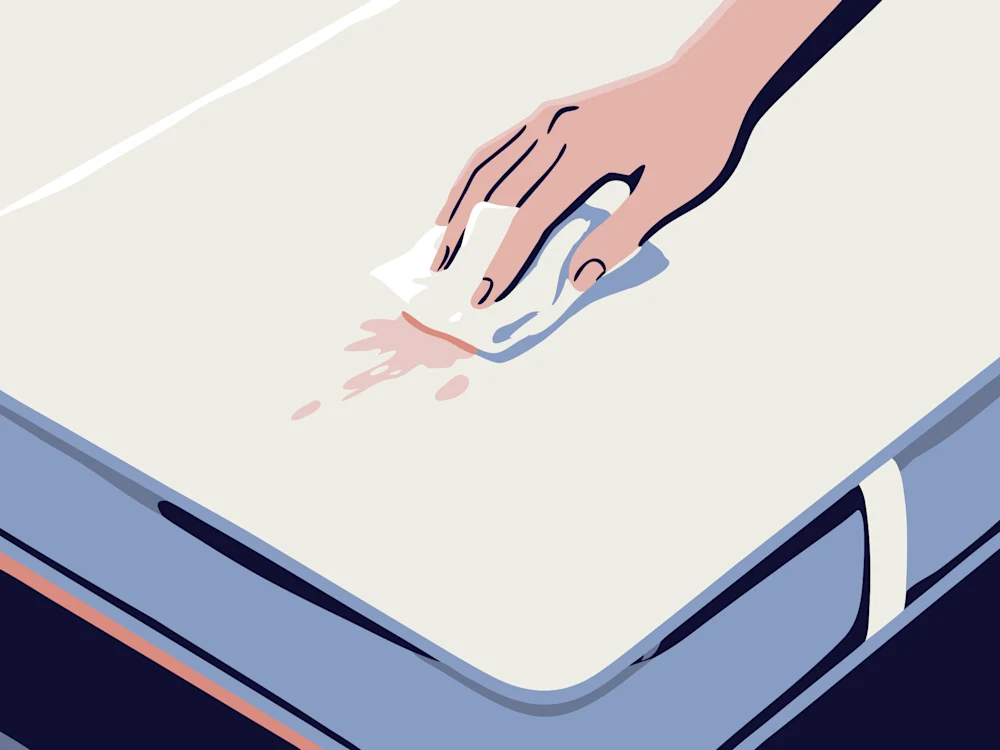
Act quickly if the stain is fresh. Blot as much liquid as possible with a dry cloth, pressing firmly rather than rubbing, to pull the moisture out rather than spread it.Mist the area lightly with your diluted vinegar solution — enough to dampen the stain without soaking through. Blot again with a dry cloth. Then sprinkle a generous layer of baking soda over the area and let it sit for several hours, overnight if possible, before vacuuming it clean.For older, dried urine stains, the same approach applies, though you may need to repeat the process. Hot water is what you want to avoid, as heat bonds the proteins in urine to the fabric and locks the stain in permanently.Sweat and yellowing
Over time, sweat causes mattresses to yellow. This is normal, and it happens faster on mattresses that don’t have a protector. For light yellowing, a paste made of baking soda, a small amount of dish soap, and cold water can lighten the stain noticeably. Simply apply to the area, leave for 30 minutes, then blot and vacuum. Deep yellowing from years of use won't fully reverse, but regular cleaning can certainly prevent it from progressing.A good waterproof protector puts a quiet, breathable barrier between your mattress and the things that cause staining, without changing how your bed feels. The Serenity Waterproof Protector was designed to work alongside your mattress rather than against it — noiseless, breathable, and fully waterproof.Spills
For water-based spills, like coffee, juice, or tea, act immediately and blot aggressively. The less time liquid has to soak in, the easier it will be to address. Cold water and blotting handles most spills; for anything with sugar or color, a small amount of dish soap mixed with cold water can lift the residue.For oily spills, sprinkle baking soda first to absorb the oil before applying any liquid. Adding water to an oily stain pushes it deeper into the fabric rather than drawing it out.How to deodorize a mattress
Baking soda is the most effective tool here, and it works better than most people expect. Strip the bed entirely, sprinkle baking soda liberally across the full surface, and let it sit for several hours. Sunlight and airflow from an open window during this time help considerably. Vacuum thoroughly when done.For stronger odors, a light mist of the vinegar solution before the baking soda can help neutralize the source rather than just masking it. Let the vinegar dry completely before adding the baking soda.Deep cleaning the whole mattress
A full clean — treating the whole surface rather than spot-treating a single area — is worth doing two to four times a year, or whenever you change your seasonal bedding.Strip the bed and vacuum the entire surface, including the top, sides, and any crevices, to remove dust and buildup. This step is easy to skip and genuinely matters, since regular vacuuming keeps the surface clean in a way that prevents accumulated odor over time.Apply baking soda across the full top surface, let it sit for several hours, and vacuum again. Most modern mattresses are one-sided, so don’t worry about flipping or rotating.Allow the mattress to air out before you remake the bed. A fan or an open window helps it dry fully after any moisture-based cleaning, and it's worth giving it more time than you think you need before putting the bedding back on.How often to clean your mattress
More often than most people do, and less often than it feels like you should.- Vacuum and deodorize: Every one to three months, or whenever you wash your duvet and seasonal bedding
- Spot treat stains: As soon as they happen — timing is what separates a clean mattress from a stained one
- Full baking soda treatment: Two to four times per year